AMI: An Adaptable Music Interface to Support the Varying Needs of People with Dementia
Abstract
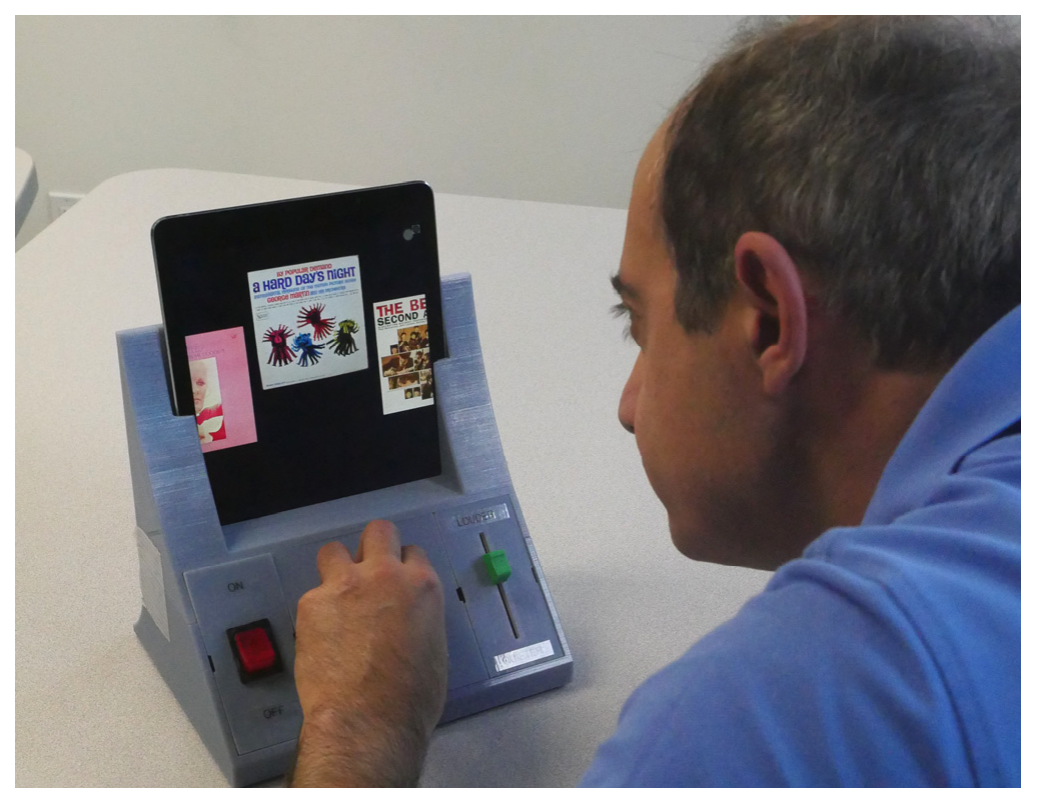
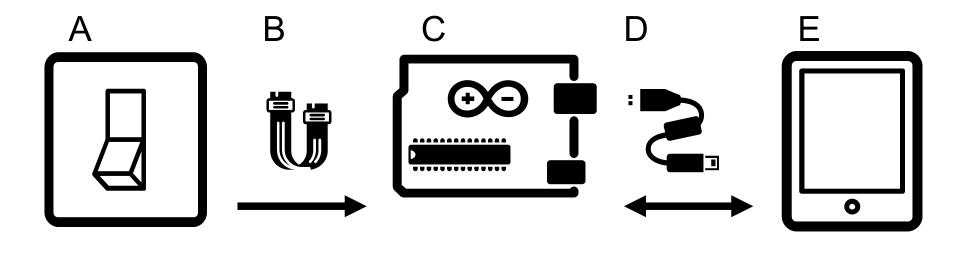
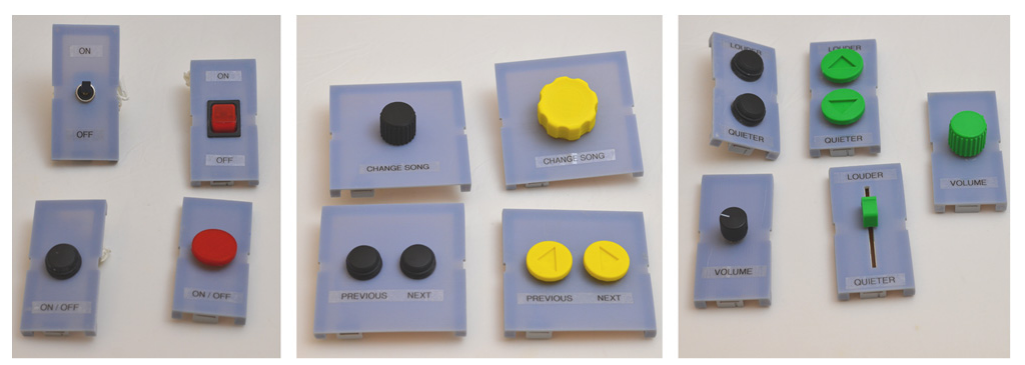
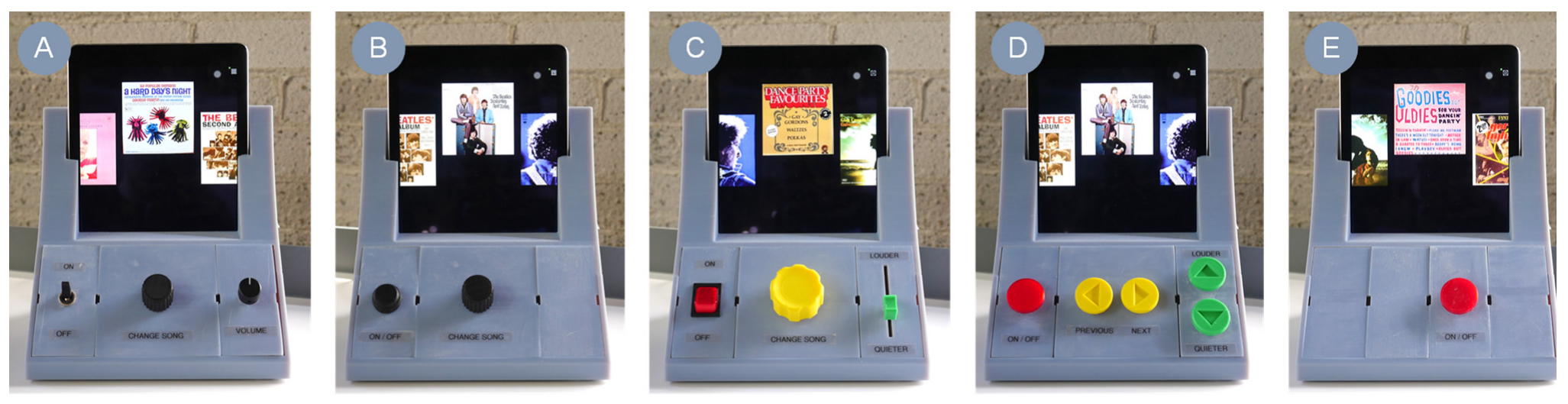
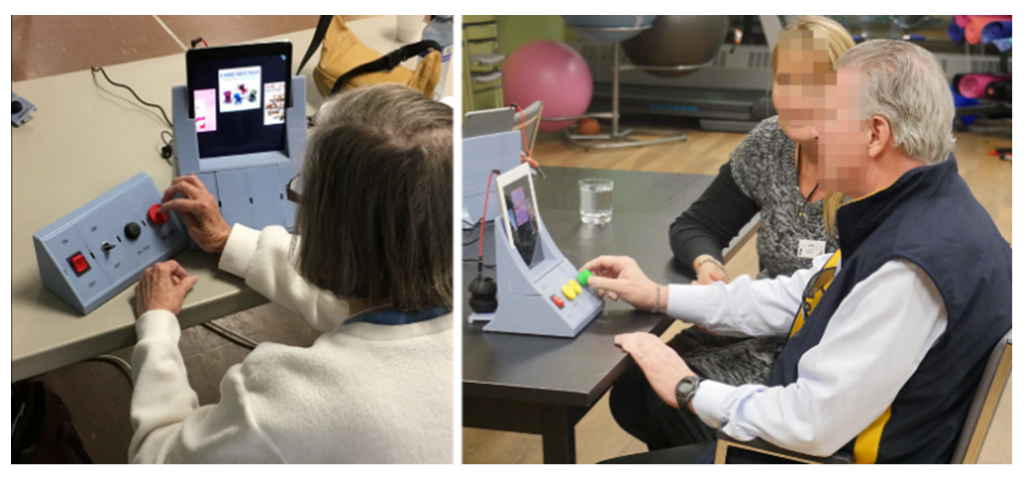
Dementia is a progressive, degenerative syndrome that erodes cognition, long term memory, and the ability to maintain social relationships. Anxiety is common among those with dementia, and ranges from momentary and mild, to chronic and severe. Listening to familiar music from childhood or early adulthood has been shown to provide therapeutic and positive quality of life effects for individuals with dementia, but most modern interfaces are unfamiliar and difficult to use which may add frustration and stress that music is intended to relieve. To enable individuals with dementia to control playback of music, we present AMI, a tangible music player that can be reconfigured and adapted to meet the changing needs and preferences of individuals. AMI provides a set of input components (e.g., buttons, switches, knobs) with varying physical properties which can be easily interchanged by a non-technical user (such as a caregiver). This work contributes the system design, results of user tests with the target population, as well as a set of design principles that can be used in the development of future interfaces.
Figures
BibTeX
@inproceedings{10.1145/3132525.3132557,
 abstract = {Dementia is a progressive, degenerative syndrome that erodes cognition, long term memory, and the ability to maintain social relationships. Anxiety is common among those with dementia, and ranges from momentary and mild, to chronic and severe. Listening to familiar music from childhood or early adulthood has been shown to provide therapeutic and positive quality of life effects for individuals with dementia, but most modern interfaces are unfamiliar and difficult to use which may add frustration and stress that music is intended to relieve. To enable individuals with dementia to control playback of music, we present AMI, a tangible music player that can be reconfigured and adapted to meet the changing needs and preferences of individuals. AMI provides a set of input components (e.g., buttons, switches, knobs) with varying physical properties which can be easily interchanged by a non-technical user (such as a caregiver). This work contributes the system design, results of user tests with the target population, as well as a set of design principles that can be used in the development of future interfaces.},
 address = {New York, NY, USA},
 author = {Seymour, P. Frazer and Matejka, Justin and Foulds, Geoff and Petelycky, Ihor and Anderson, Fraser},
 booktitle = {Proceedings of the 19th International ACM SIGACCESS Conference on Computers and Accessibility},
 doi = {10.1145/3132525.3132557},
 isbn = {9781450349260},
 keywords = {personalization, tangible input, accessibility, dementia, music and audio},
 location = {Baltimore, Maryland, USA},
 numpages = {5},
 pages = {150–154},
 publisher = {Association for Computing Machinery},
 series = {ASSETS '17},
 title = {AMI: An Adaptable Music Interface to Support the Varying Needs of People with Dementia},
 url = {https://doi.org/10.1145/3132525.3132557},
 year = {2017}
}