k j

Paper Forager: Supporting the Rapid Exploration of Research Document Collections

Justin Matejka, Tovi Grossman, George Fitzmaurice
January 2021 · Proceedings of Graphics Interface 2021 (GI)

Abstract

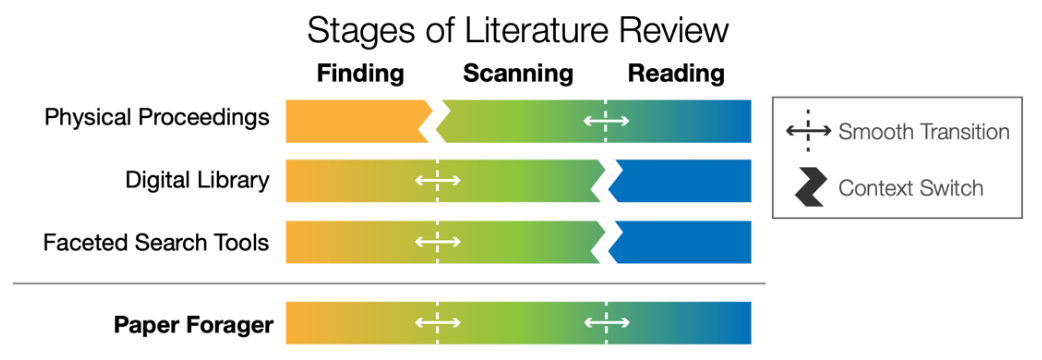
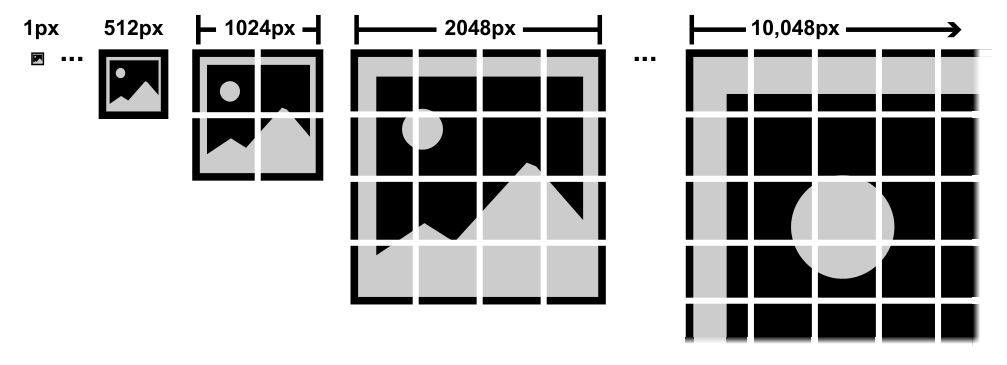
We present Paper Forager, a web-based system which allows users to rapidly explore large collections of research documents. Our sample corpus uses 5,055 papers published at the ACM CHI and UIST conferences. Paper Forager provides a visually based browsing experience, allowing users to identify papers of interest based on their graphical appearance, in addition to providing traditional faceted search techniques. A cloud-based architecture stores the papers as multi-resolution images, giving users immediate access to reading individual pages of a paper, thus reducing the transaction cost between finding, scanning, and reading papers of interest. Initial user feedback sessions elicited positive subjective feedback, while a 24-month external deployment generated in-the-wild usage data which we analyze. Users of the system indicated that they would be enthusiastic to continue having access to the Paper Forager system in the future.

Figures
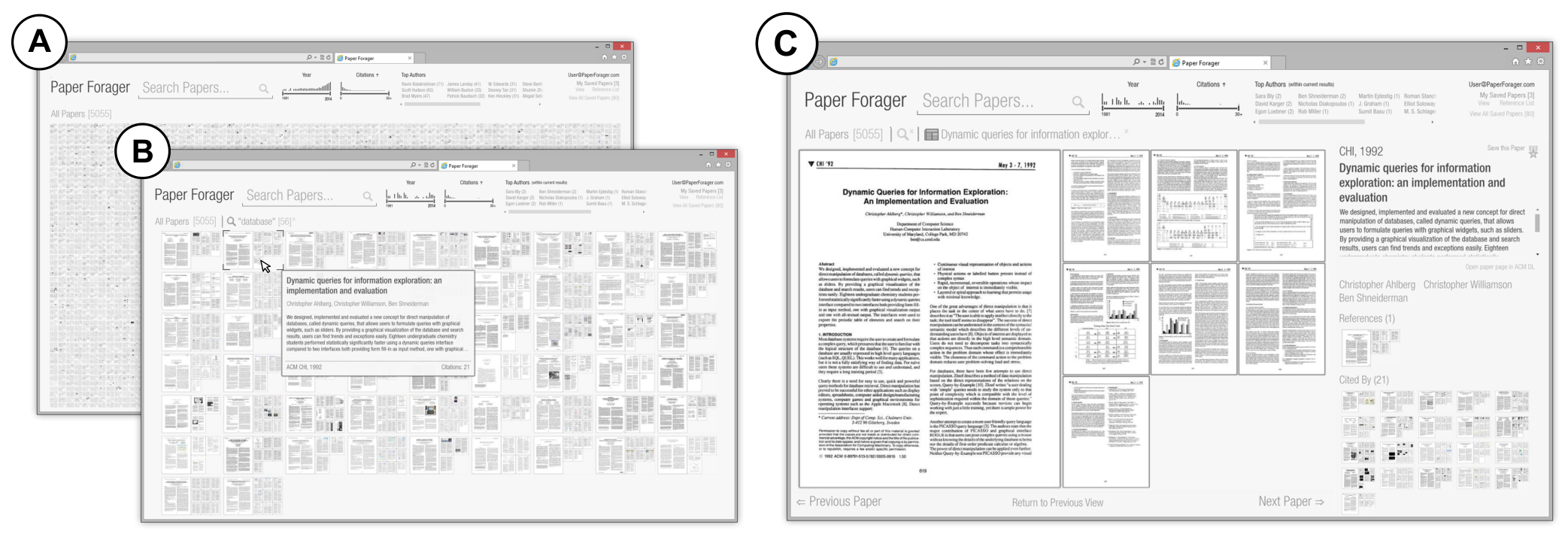
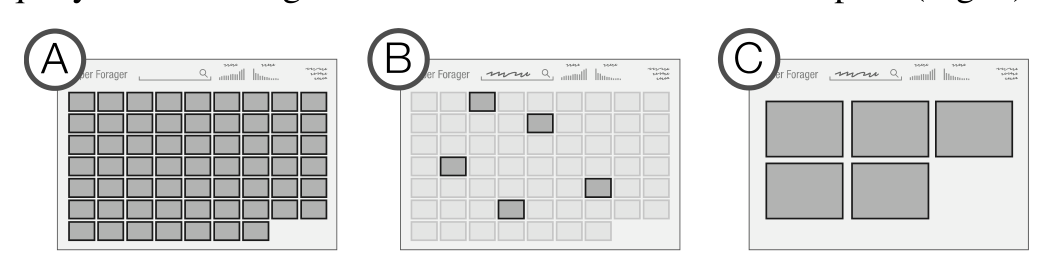
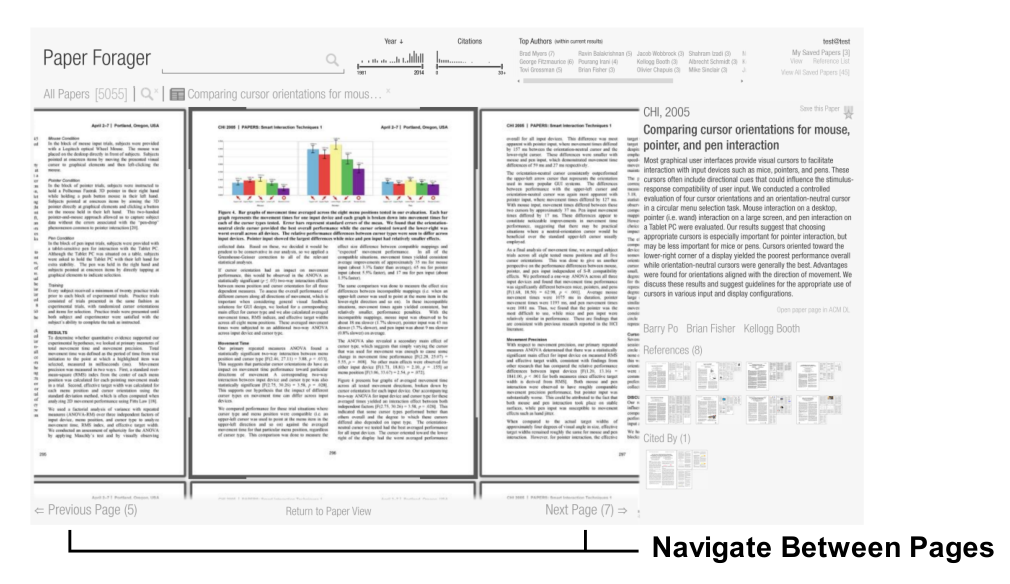
Fig. 1. Three views of the Paper Forager system: (A) the initial state of system showing all 5,055 papers in the sample corpus from the ACM CHI and UIST conferences, (B) the filtered results showing only the papers containing an individual keyword, and (C) a sample paper overview page which further allows a user to click on a page to read the content.
Fig. 2. Four main approaches to paper discovery the context switches required between the various stages of the literature review process.
Fig. 3. [ne interface controls of Paper Forager.
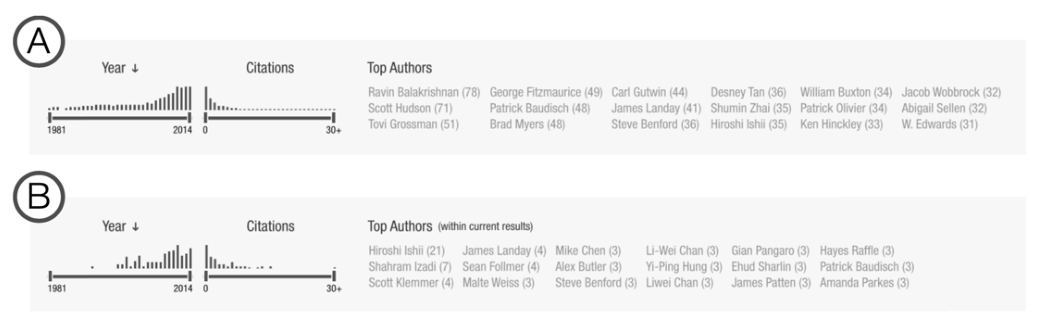
Fig. 4. (A) Histogram filters and Author List for all papers in the CHI and UIST corpus and (B) after searching for the term “tangible”.
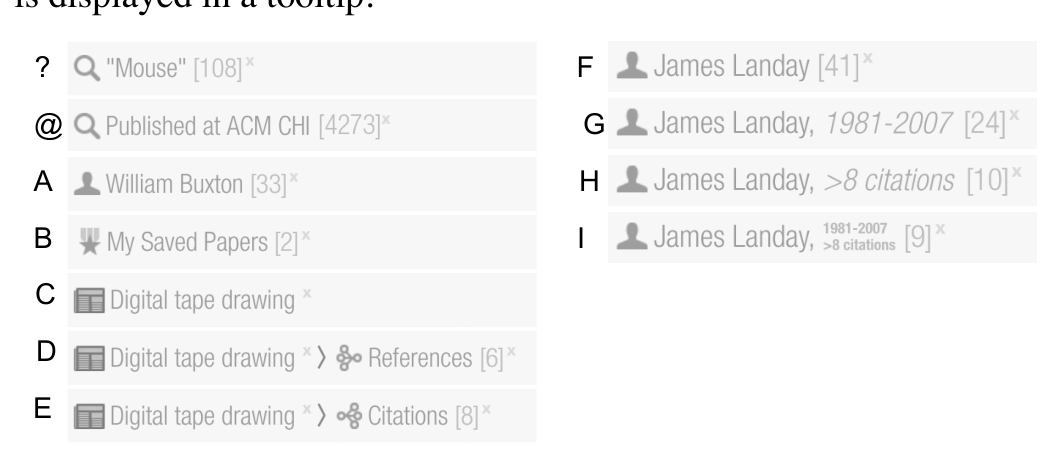
Fig. 5. History tokens for (A) search terms, (B) conferences, (C) authors, (D) saved paper lists, (E) individual papers, (F) references of a paper, (G) citations of a paper, and tokens with filters applied (H-k).
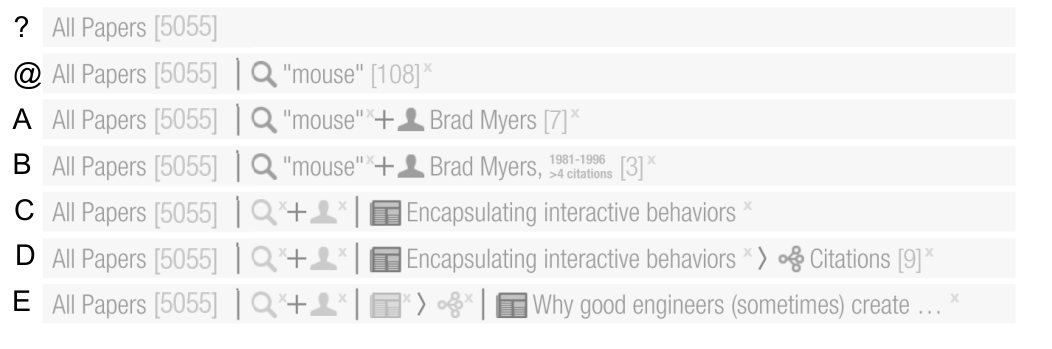
Fig. 6. Initial state of the history bar (A) and changes after a series of operations: (B) searching for “mouse”, (C) clicking on the author Brad Myers, (D) adjusting the year and citation filters, (E) selecting a paper, (F) viewing that paper’s citations, and (G) selecting another paper.
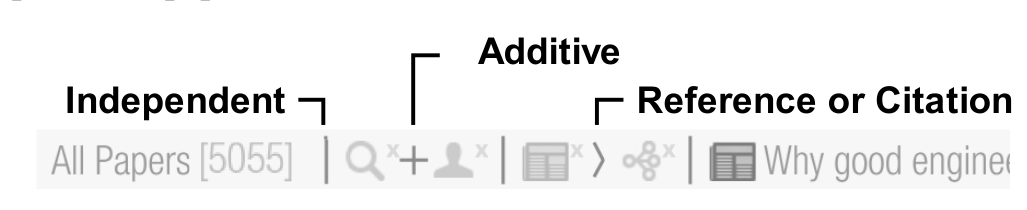
Fig. 7. History token separators.
Fig. 8. Stages of the reordering animation. (A) initial state, (B) removed papers fade away, (C) remaining tiles move and resize into new position.
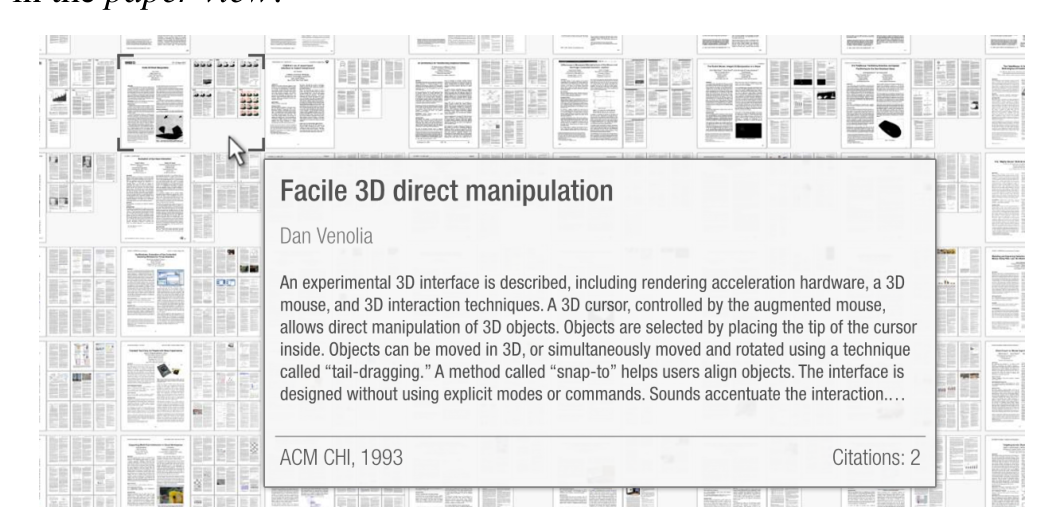
Fig. 9. Example of a paper tooltip.
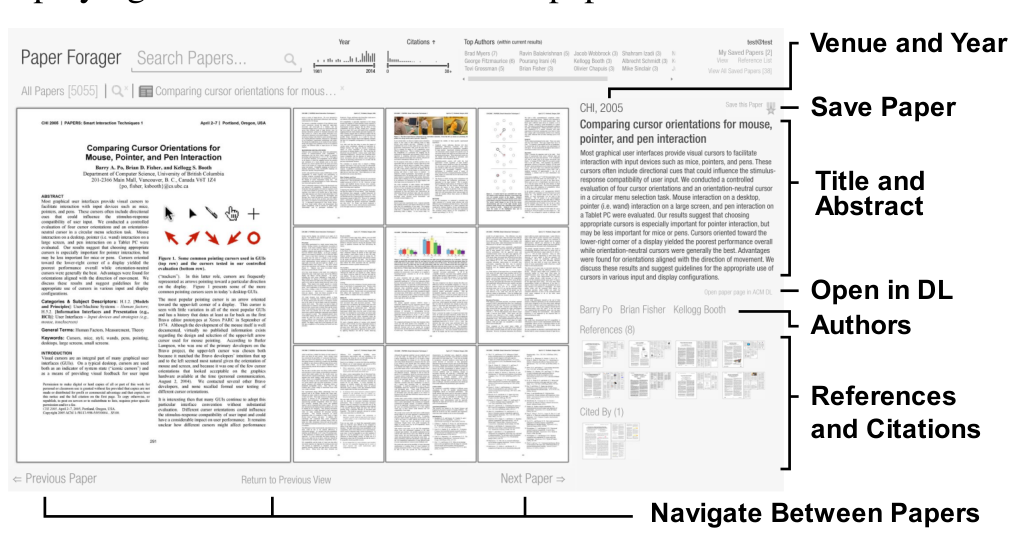
Fig. 10. Interface elements of the single paper view.
Fig. 11. The page view displays individual pages.
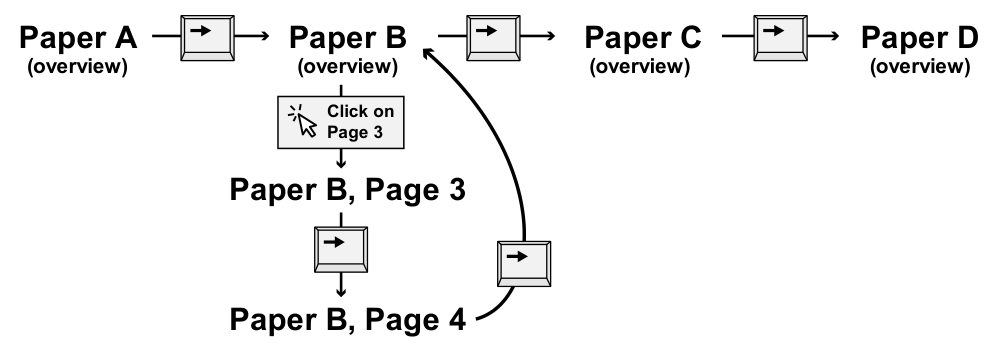
Fig.12. Workflow for navigating between and within papers. (Note: “Paper B” has only 4 pages.)
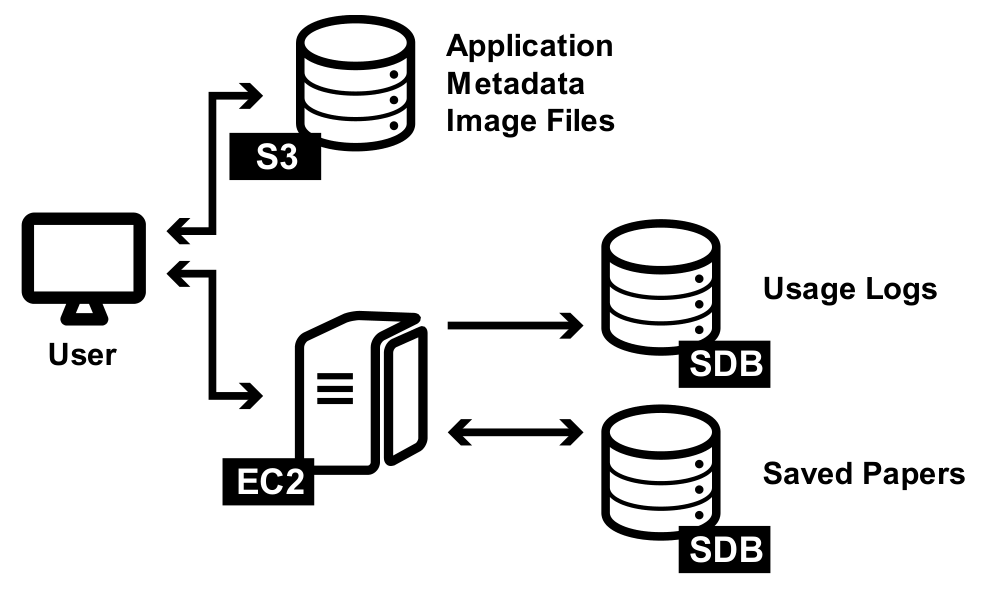
Fig. 13. System architecture diagram.
Fig. 14. Image Pyramid data format example.
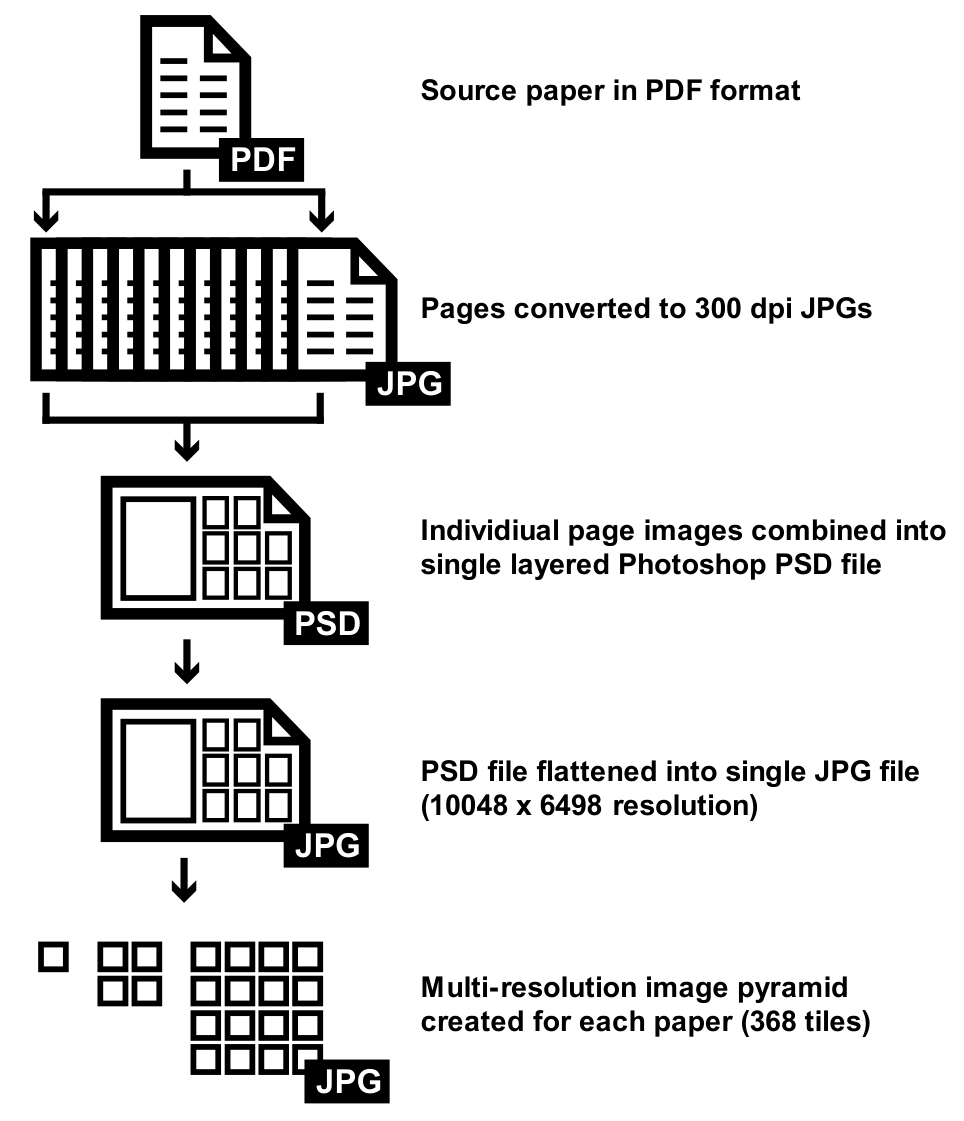
Fig. 15. Data processing pipeline.
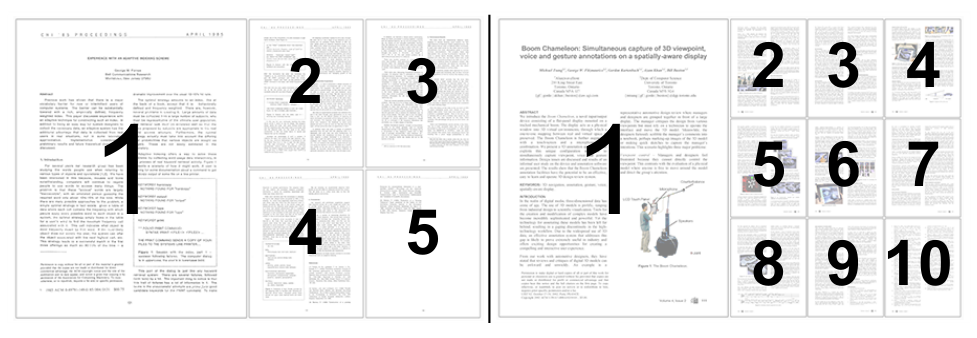
Fig. 16. Sample 5-page (left) and 10-page layouts (right).
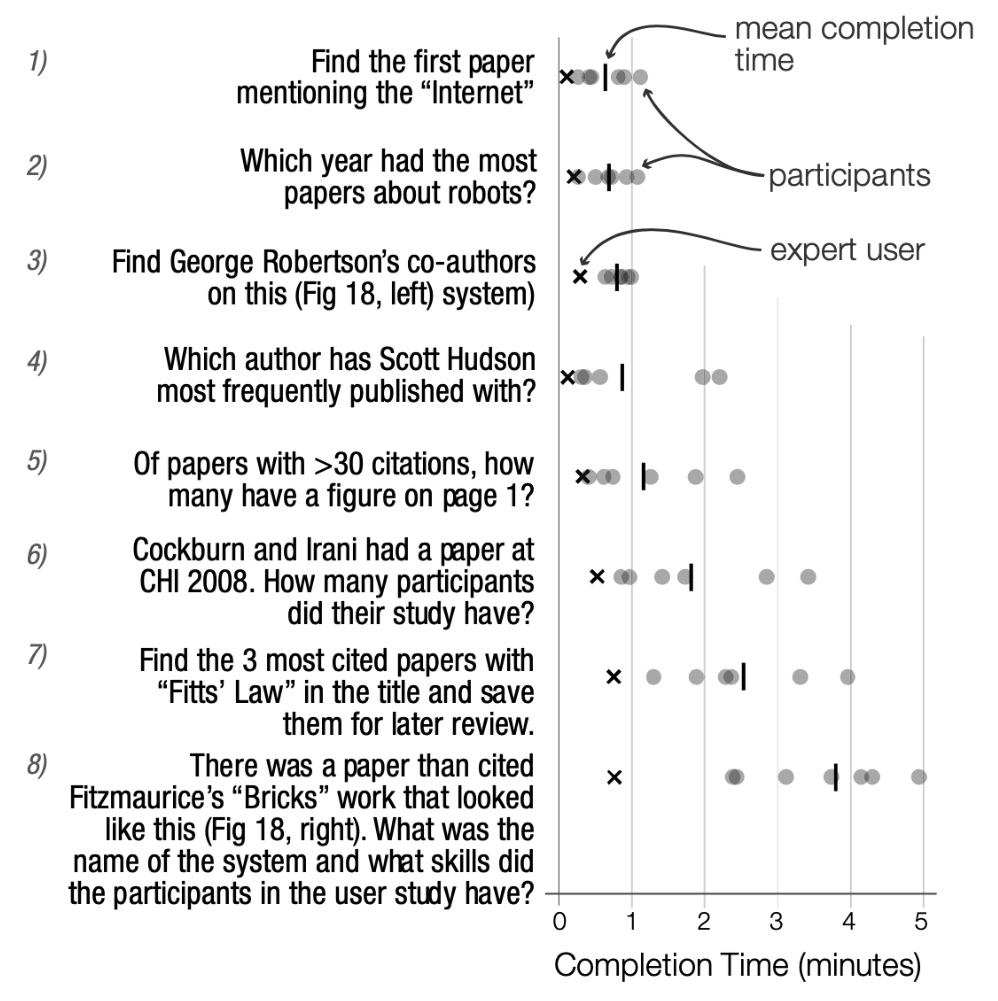
Fig. 17. Task completion times for the 6 study participants, as well as times from one ‘expert’ user.
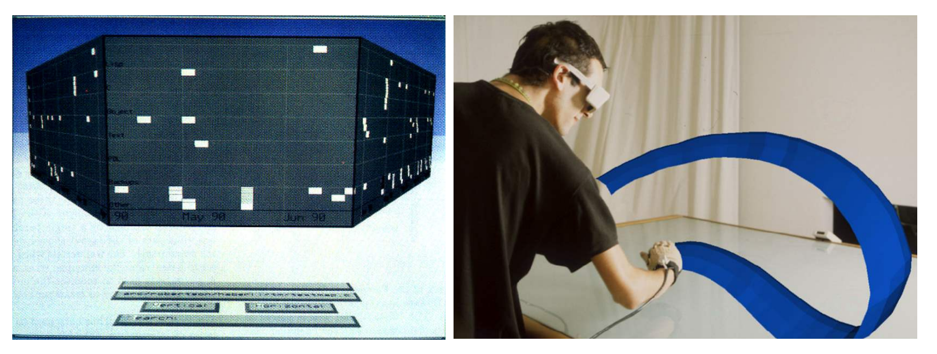
ig. 18. Images used in questions 3 (left) and 8 (right).
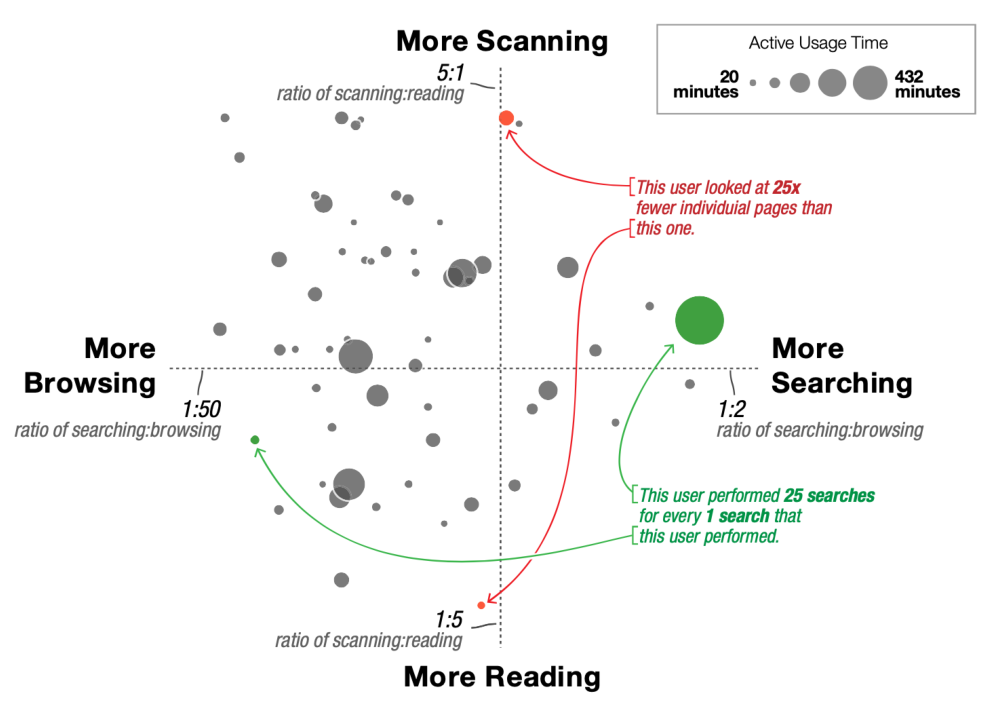
Fig. 19. Usage log analysis showing usage patterns for finding behavior (x-axis) and scanning vs. reading (y-axis).
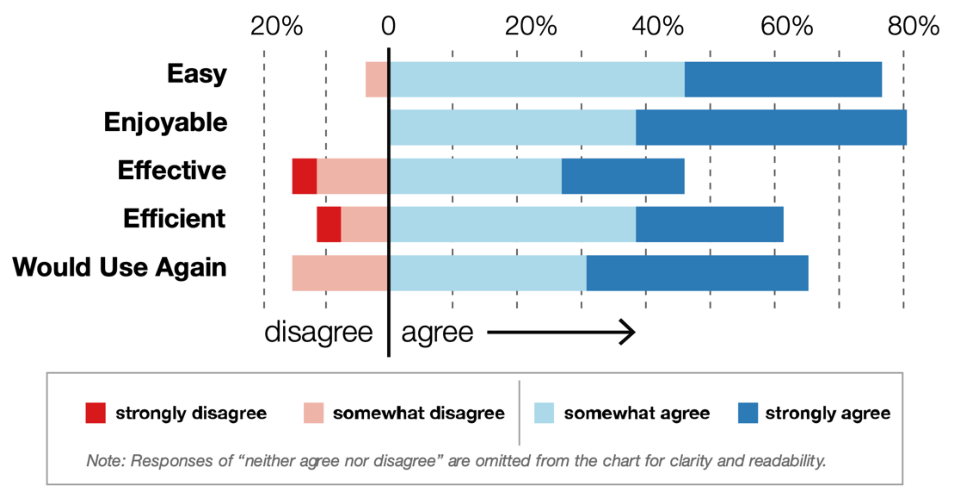
Fig. 20. Results from the subjective questions asked after the external deployment.

BibTeX

@inproceedings{Matejka:2021:10.20380/GI2021.27, author = {Matejka, Justin and Grossman, Tovi and Fitzmaurice, George}, title = {Paper Forager: Supporting the Rapid Exploration of Research Document Collections}, booktitle = {Proceedings of Graphics Interface 2021}, series = {GI 2021}, year = {2021}, issn = {0713-5424}, isbn = {978-0-9947868-6-9}, location = {Virtual Event}, pages = {237 -- 245}, numpages = {9}, doi = {10.20380/GI2021.27}, publisher = {Canadian Information Processing Society},}