Swifter: Improved Online Video Scrubbing
Abstract
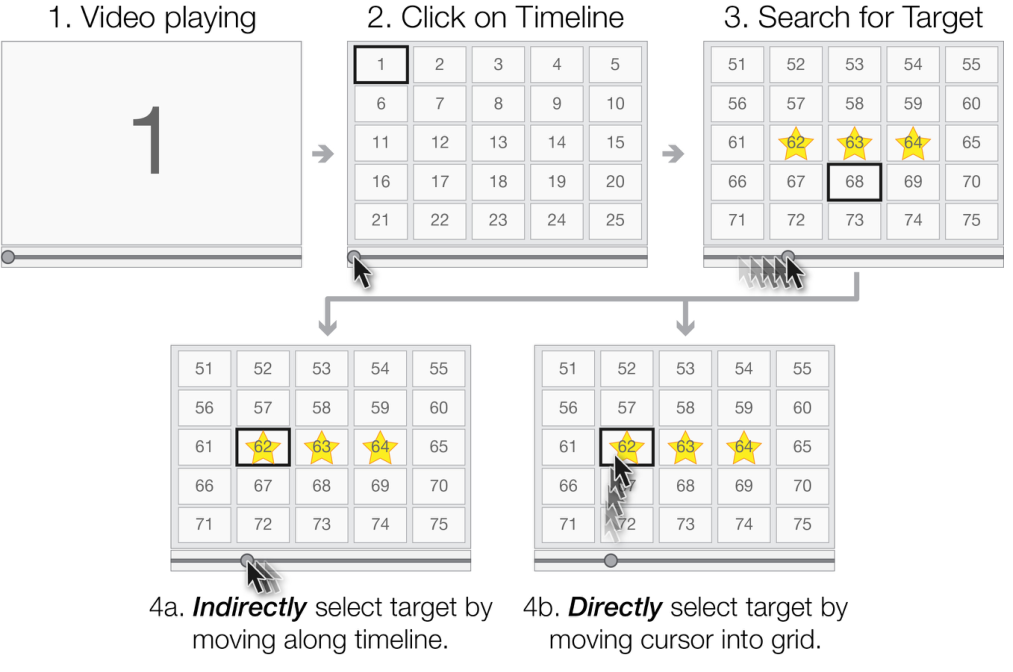
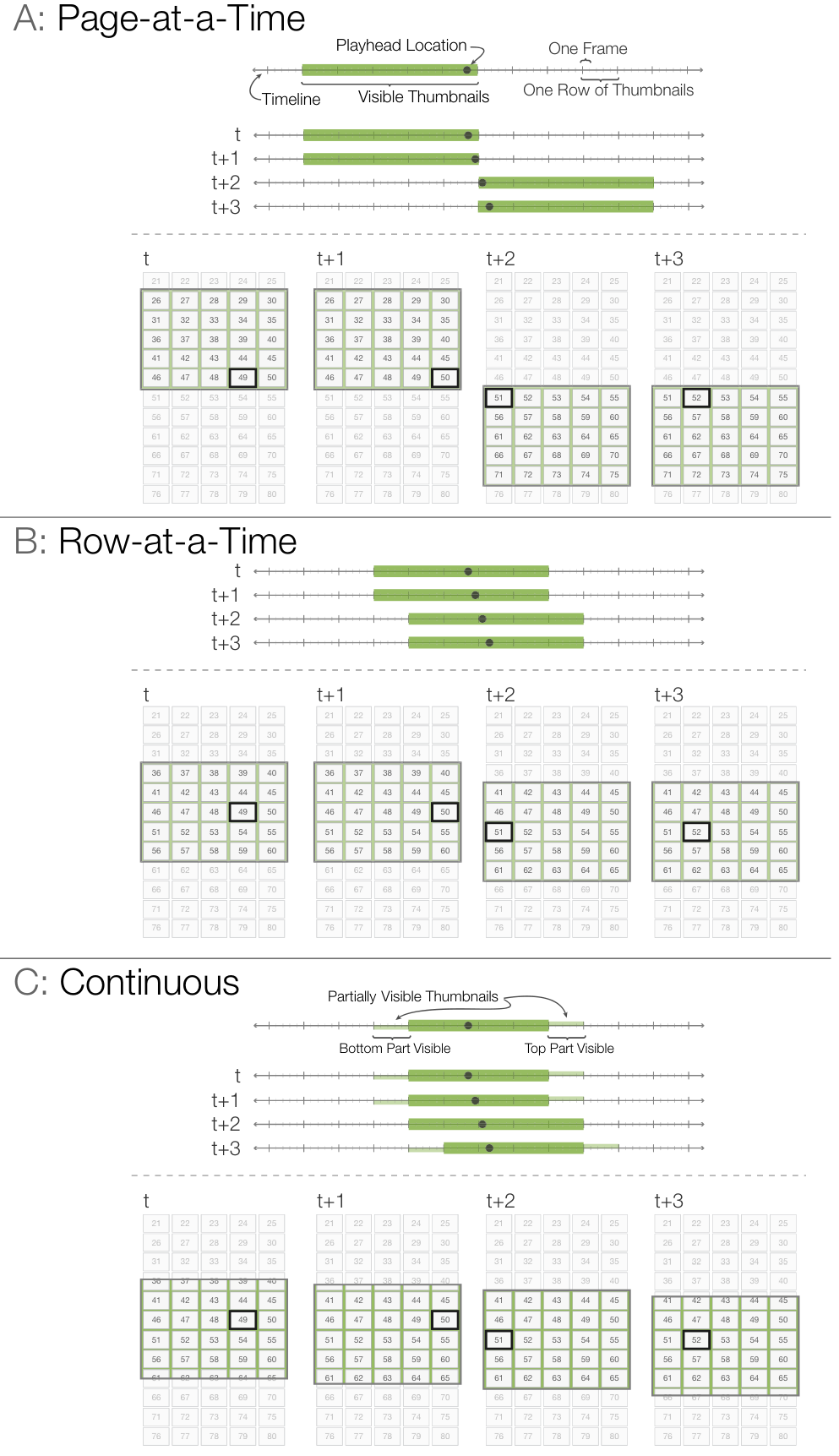
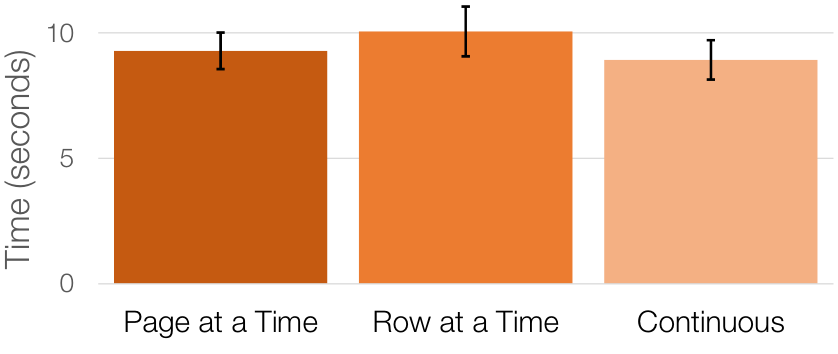
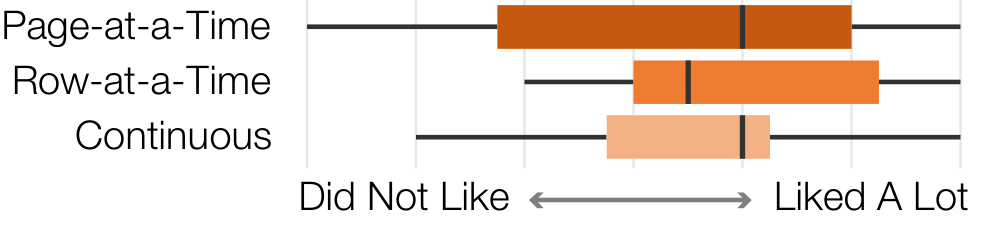
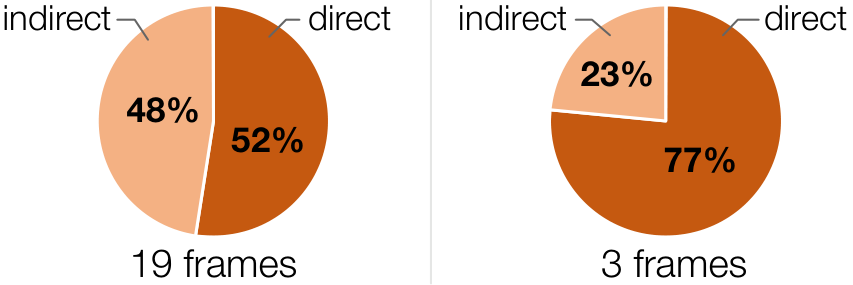
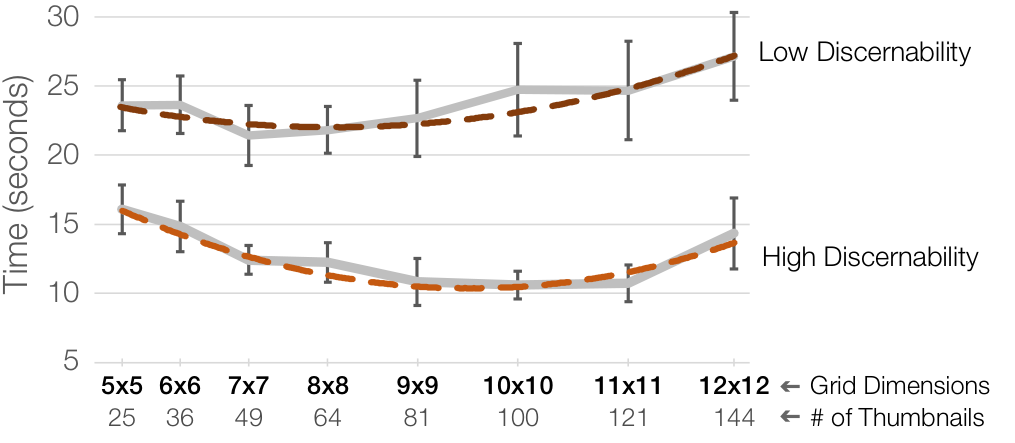
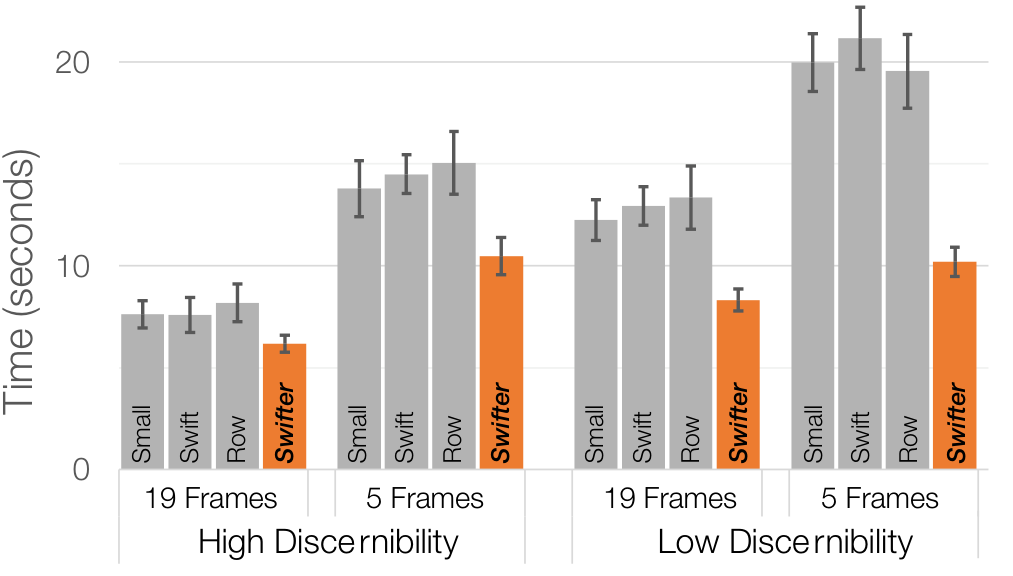
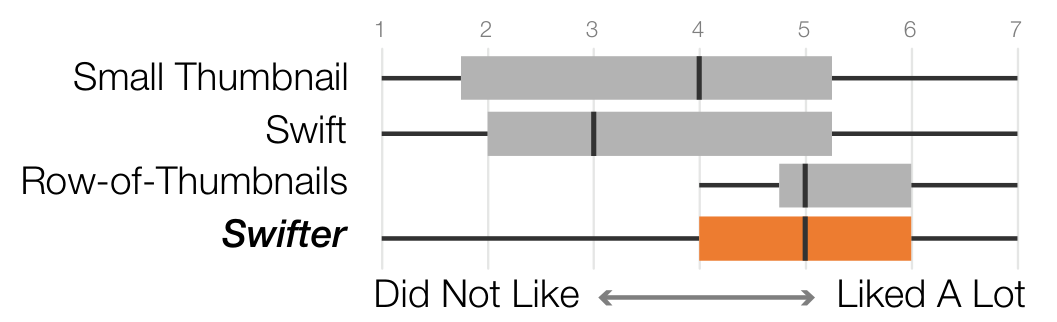
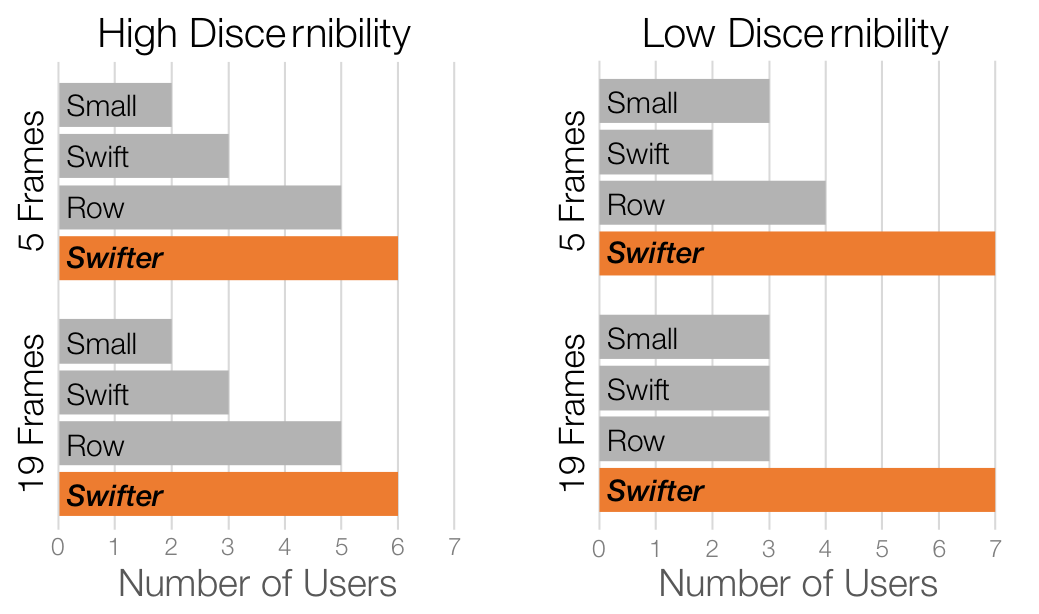
Online streaming video systems have become extremely popular, yet navigating to target scenes of interest can be a challenge. While recent techniques have been introduced to enable real-time seeking, they break down for large videos, where scrubbing the timeline causes video frames to skip and flash too quickly to be comprehendible. We present Swifter, a new video scrubbing technique that displays a grid of pre-cached thumbnails during scrubbing actions. In a series of studies, we first investigate possible design variations of the Swifter technique, and the impact of those variations on its performance. Guided by these results we compare an implementation of Swifter to the previously published Swift technique, in addition to the approaches utilized by YouTube and Netfilx. Our results show that Swifter significantly outperforms each of these techniques in a scene locating task, by a factor of up to 48%.
Figures
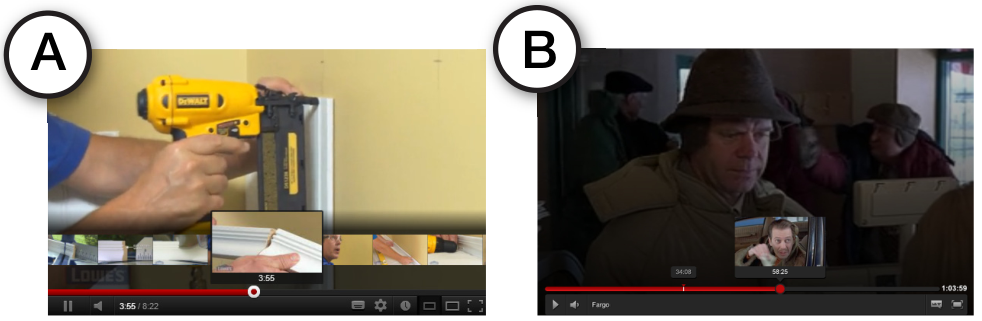
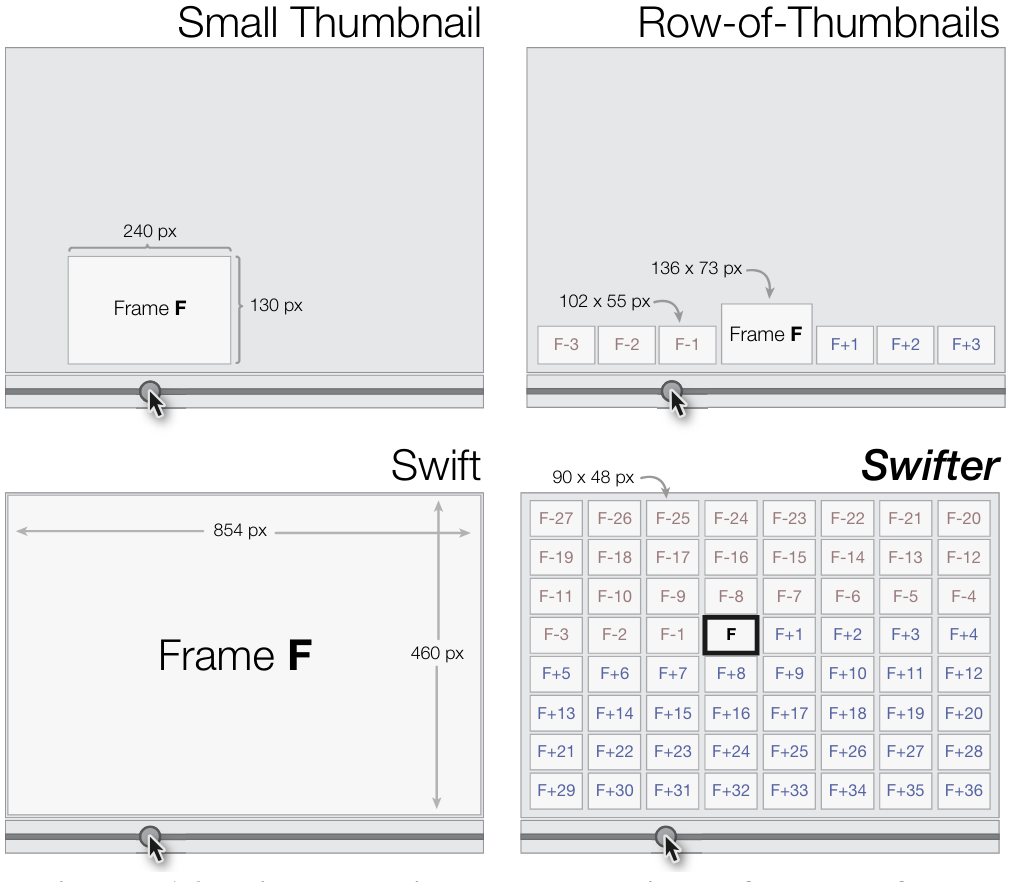
![Figure 1. Scrubbing behavior of a traditional streaming video player, the Swift interface [16], and our new Swifter interface, which shows multiple frames around the active timeline location and allows for direct selection of each frame.](/publication/swifter/figure-1-cropped.png)





BibTeX
@inproceedings{10.1145/2470654.2466149,
 abstract = {Online streaming video systems have become extremely popular, yet navigating to target scenes of interest can be a challenge. While recent techniques have been introduced to enable real-time seeking, they break down for large videos, where scrubbing the timeline causes video frames to skip and flash too quickly to be comprehendible. We present Swifter, a new video scrubbing technique that displays a grid of pre-cached thumbnails during scrubbing actions. In a series of studies, we first investigate possible design variations of the Swifter technique, and the impact of those variations on its performance. Guided by these results we compare an implementation of Swifter to the previously published Swift technique, in addition to the approaches utilized by YouTube and Netfilx. Our results show that Swifter significantly outperforms each of these techniques in a scene locating task, by a factor of up to 48%.},
 address = {New York, NY, USA},
 author = {Matejka, Justin and Grossman, Tovi and Fitzmaurice, George},
 booktitle = {Proceedings of the SIGCHI Conference on Human Factors in Computing Systems},
 doi = {10.1145/2470654.2466149},
 isbn = {9781450318990},
 keywords = {video navigation, video, online streaming},
 location = {Paris, France},
 numpages = {10},
 pages = {1159–1168},
 publisher = {Association for Computing Machinery},
 series = {CHI '13},
 title = {Swifter: Improved Online Video Scrubbing},
 url = {https://doi.org/10.1145/2470654.2466149},
 year = {2013}
}