Candid Interaction: Revealing Hidden Mobile and Wearable Computing Activities
Abstract
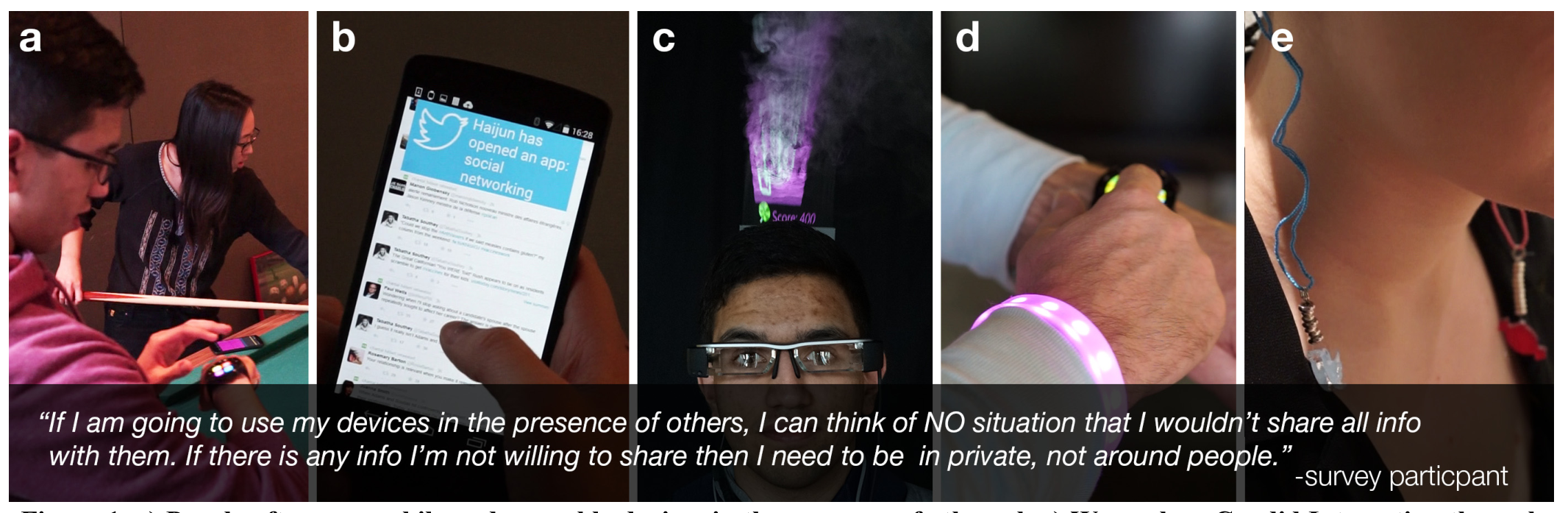
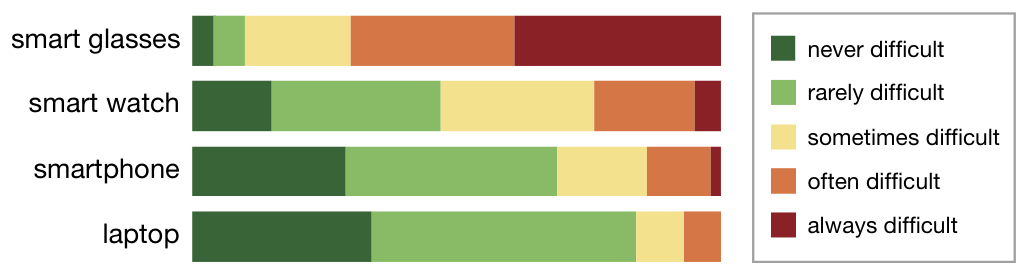
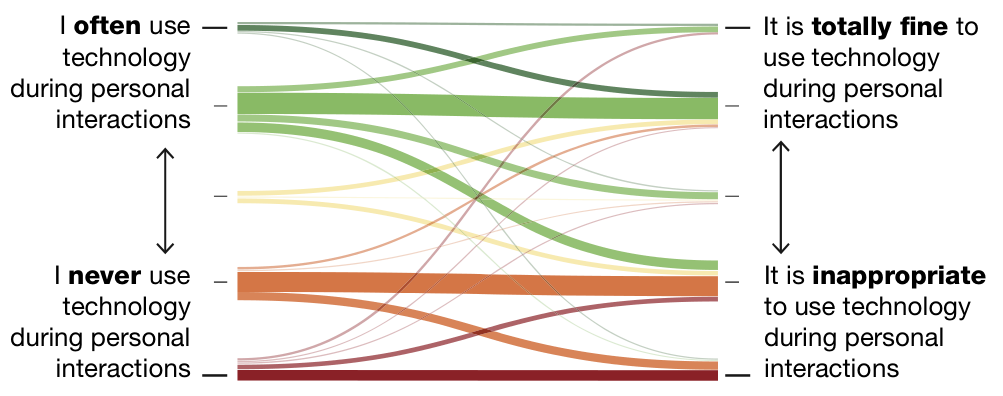
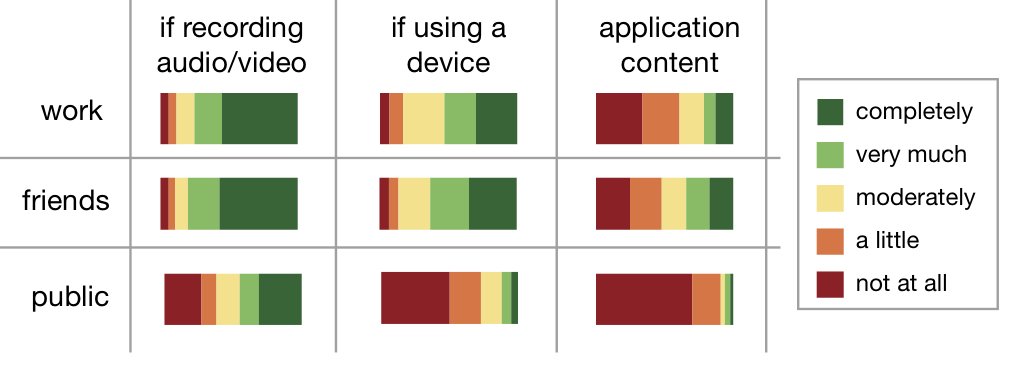
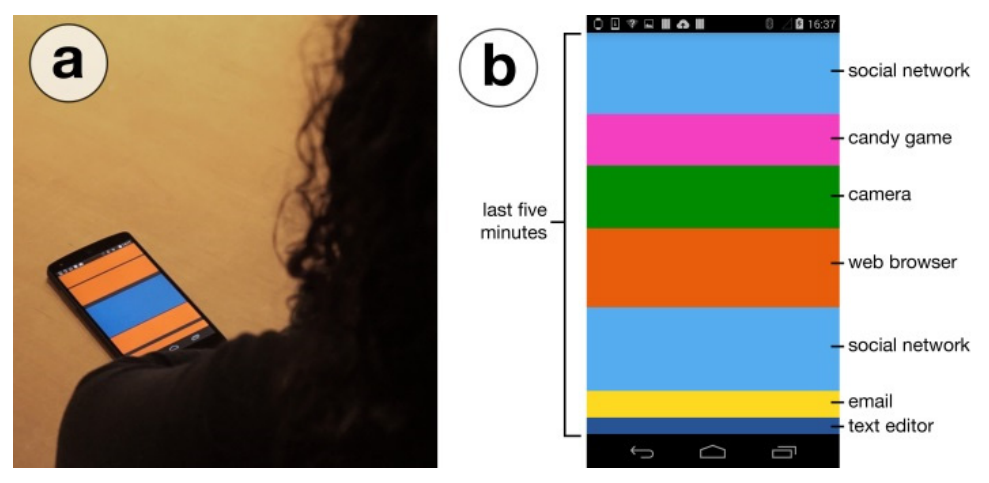
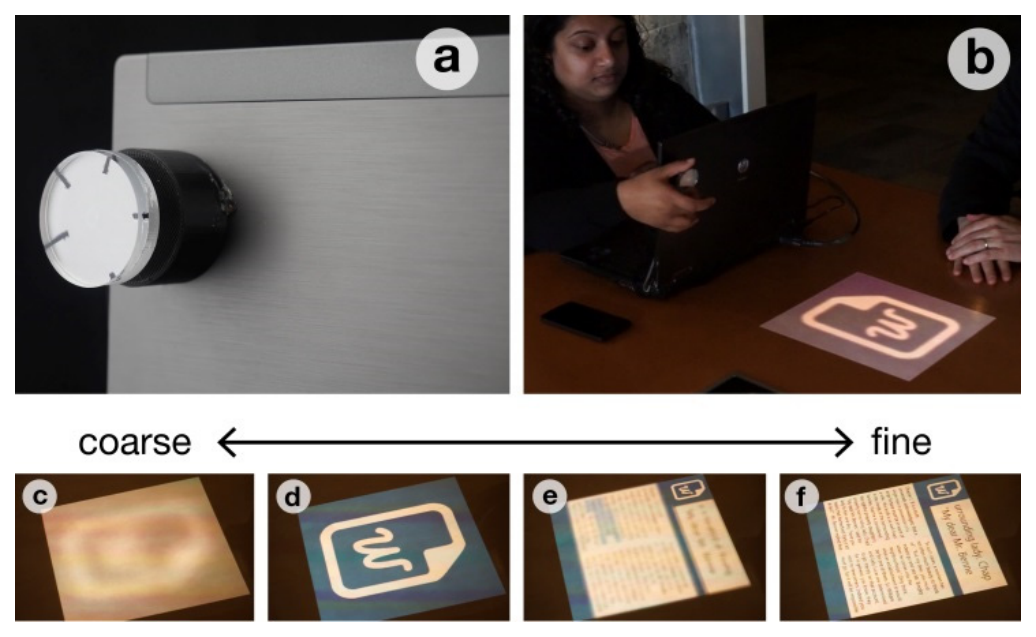
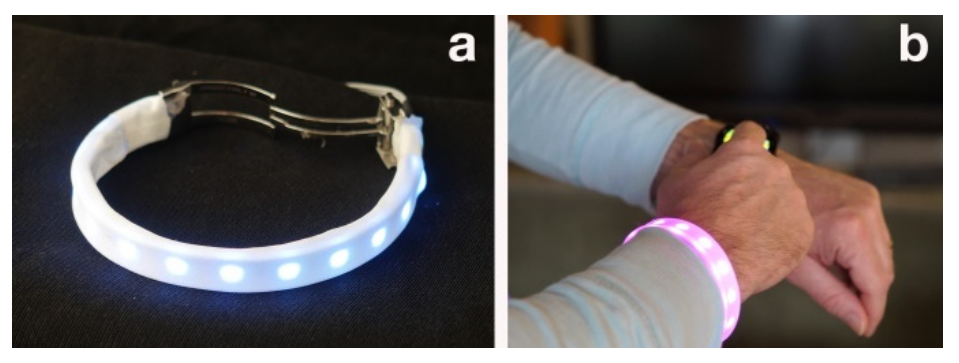
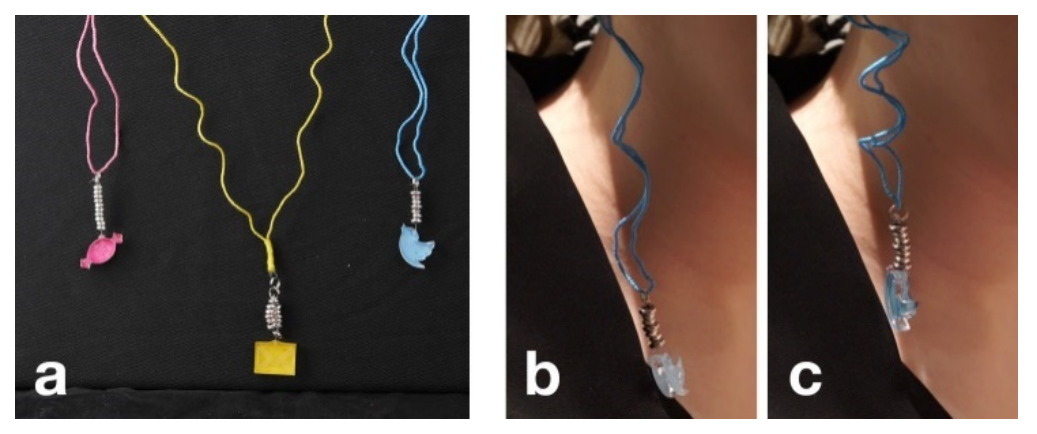
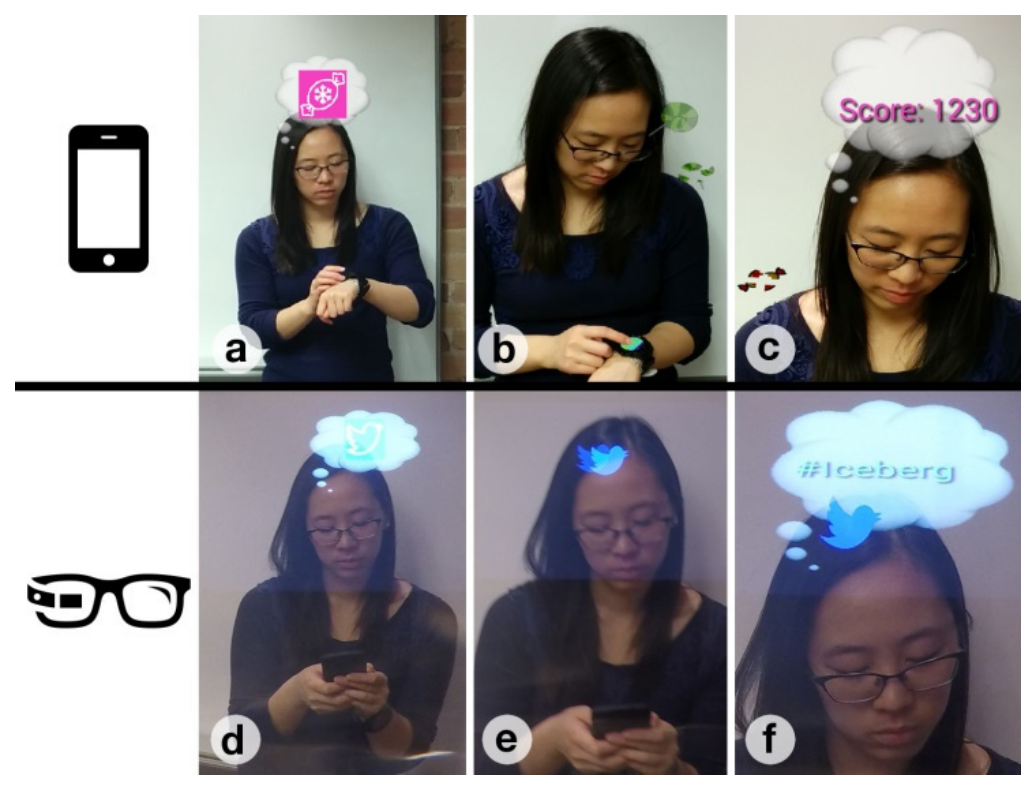
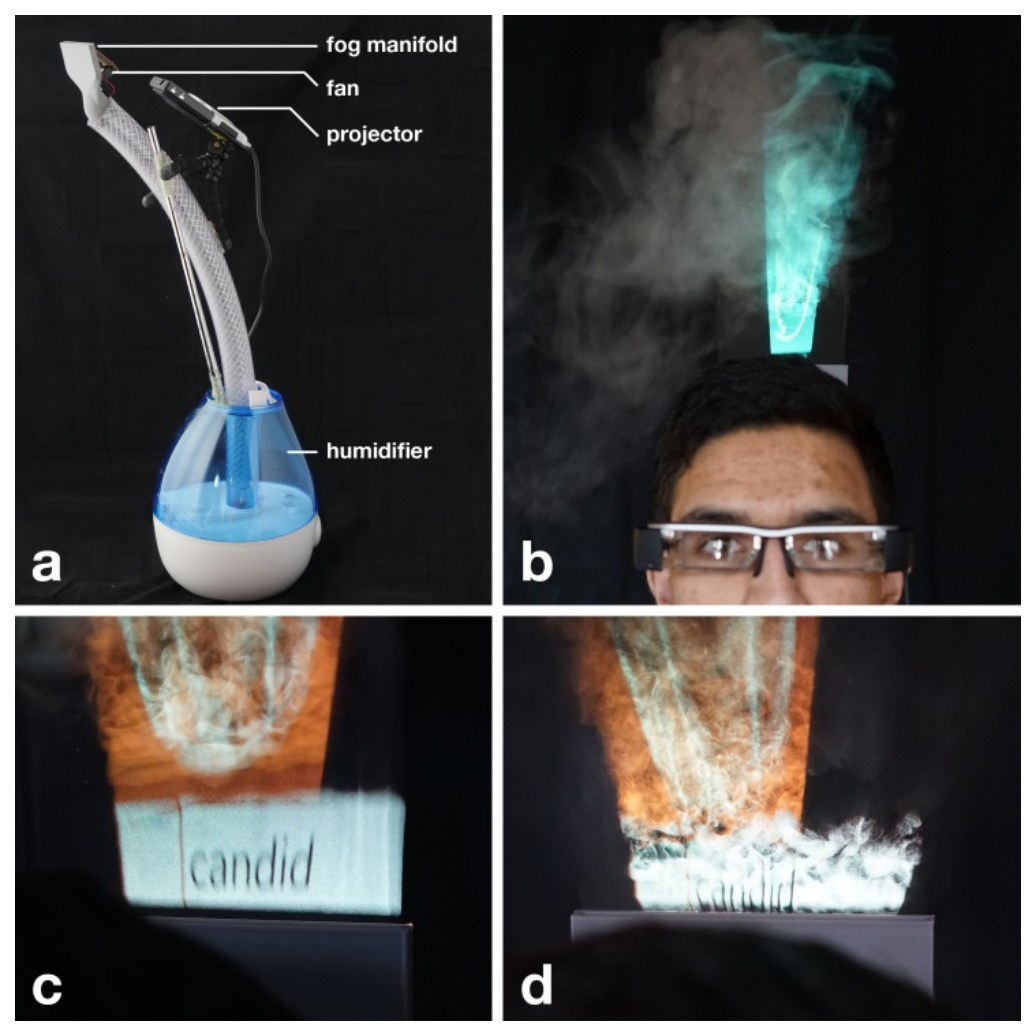
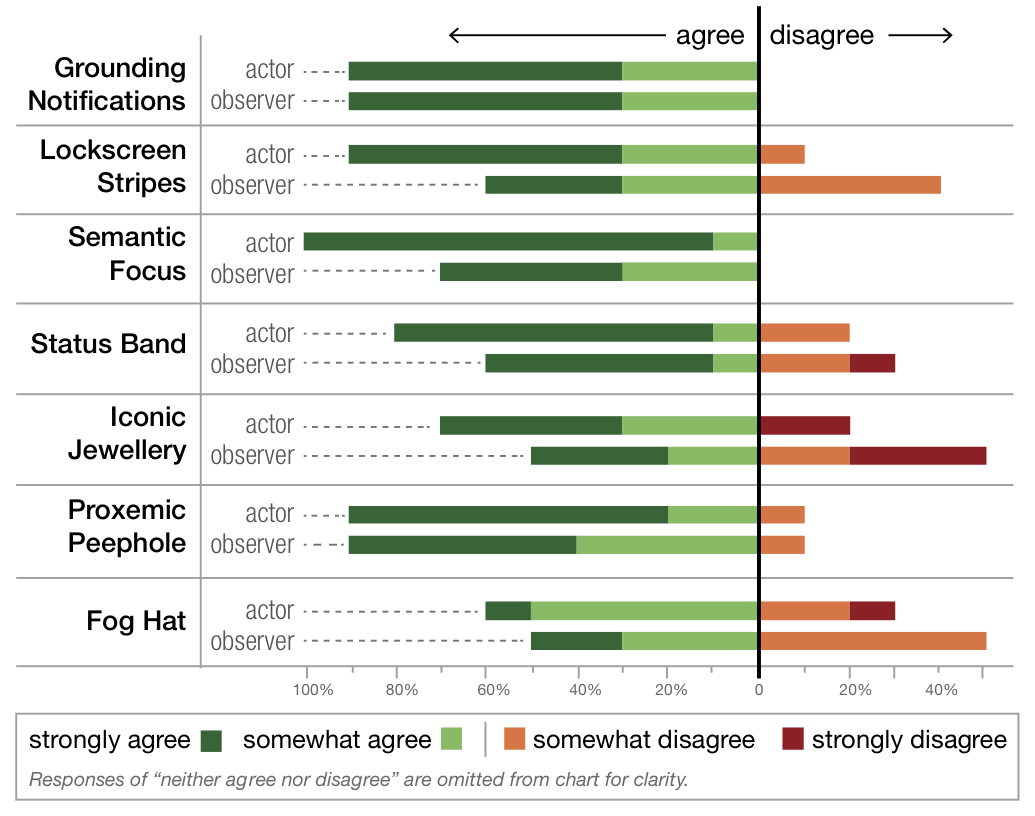
The growth of mobile and wearable technologies has made it often difficult to understand what people in our surroundings are doing with their technology. In this paper, we introduce the concept of candid interaction: techniques for providing awareness about our mobile and wearable device usage to others in the vicinity. We motivate and ground this exploration through a survey on current attitudes toward device usage during interpersonal encounters. We then explore a design space for candid interaction through seven prototypes that leverage a wide range of technological enhancements, such as Augmented Reality, shape memory muscle wire, and wearable projection. Preliminary user feedback of our prototypes highlights the trade-offs between the benefits of sharing device activity and the need to protect user privacy.
Figures
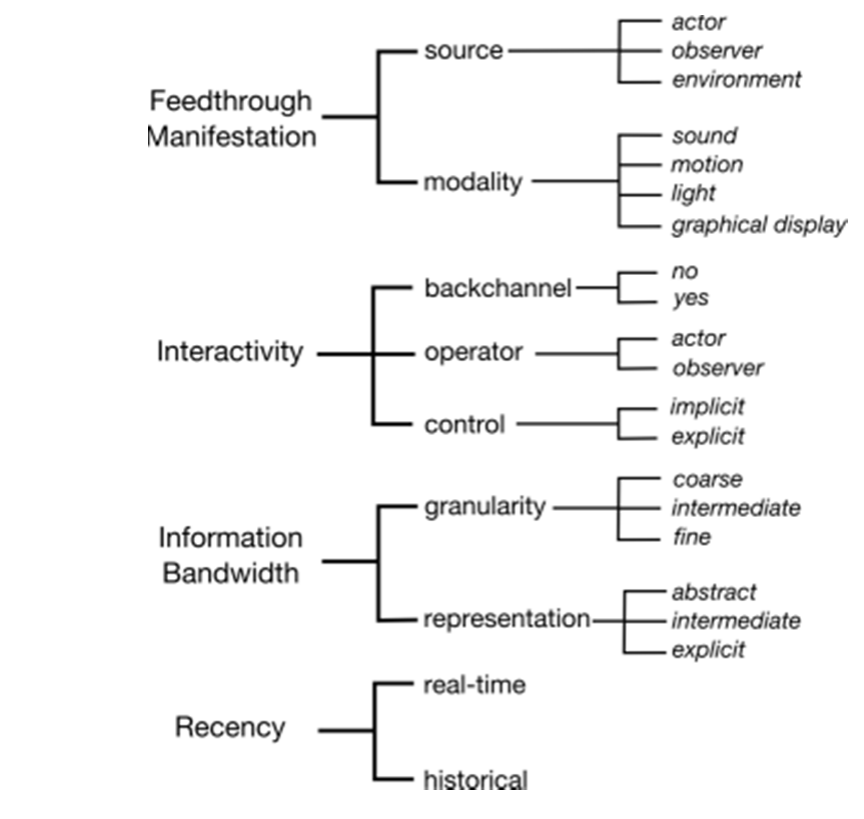
![Figure 2. Relationship of candid interaction to other types of social interaction in dimensions of Reeves et al. [35].](/publication/candid-interaction/figure-2-cropped.png)
BibTeX
@inproceedings{10.1145/2807442.2807449,
 abstract = {The growth of mobile and wearable technologies has made it often difficult to understand what people in our surroundings are doing with their technology. In this paper, we introduce the concept of candid interaction: techniques for providing awareness about our mobile and wearable device usage to others in the vicinity. We motivate and ground this exploration through a survey on current attitudes toward device usage during interpersonal encounters. We then explore a design space for candid interaction through seven prototypes that leverage a wide range of technological enhancements, such as Augmented Reality, shape memory muscle wire, and wearable projection. Preliminary user feedback of our prototypes highlights the trade-offs between the benefits of sharing device activity and the need to protect user privacy.},
 address = {New York, NY, USA},
 author = {Ens, Barrett and Grossman, Tovi and Anderson, Fraser and Matejka, Justin and Fitzmaurice, George},
 booktitle = {Proceedings of the 28th Annual ACM Symposium on User Interface Software & Technology},
 doi = {10.1145/2807442.2807449},
 isbn = {9781450337793},
 keywords = {awareness, wearable devices, social acceptance, candid interaction},
 location = {Charlotte, NC, USA},
 numpages = {10},
 pages = {467–476},
 publisher = {Association for Computing Machinery},
 series = {UIST '15},
 title = {Candid Interaction: Revealing Hidden Mobile and Wearable Computing Activities},
 url = {https://doi.org/10.1145/2807442.2807449},
 year = {2015}
}