Crowdsourced Fabrication
Abstract
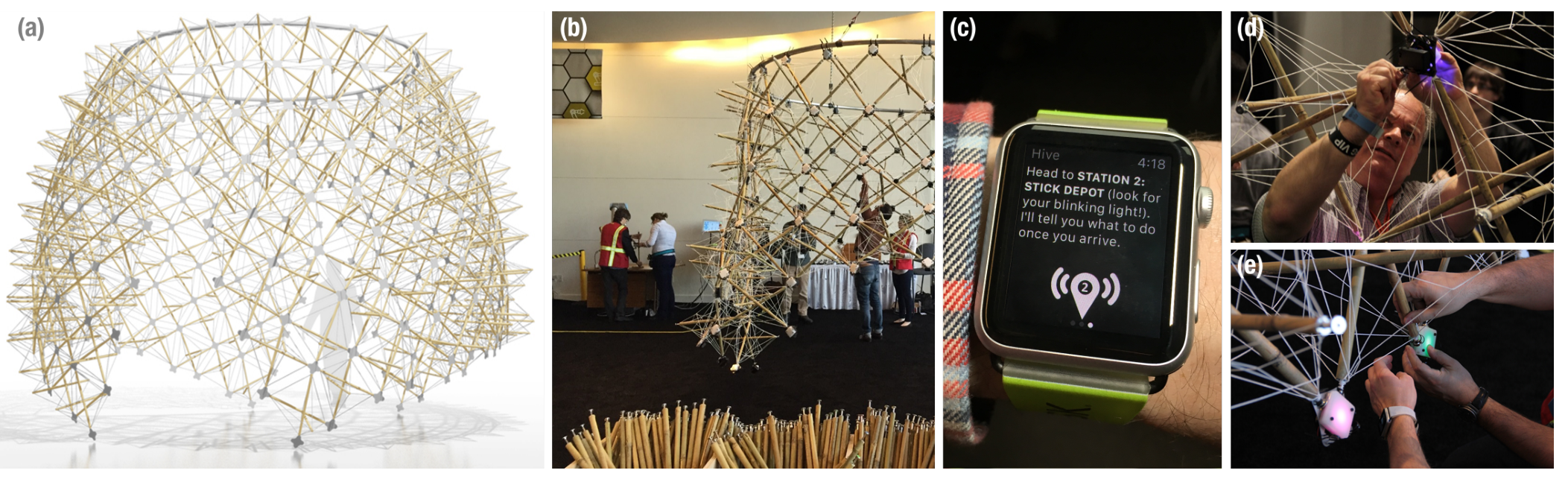
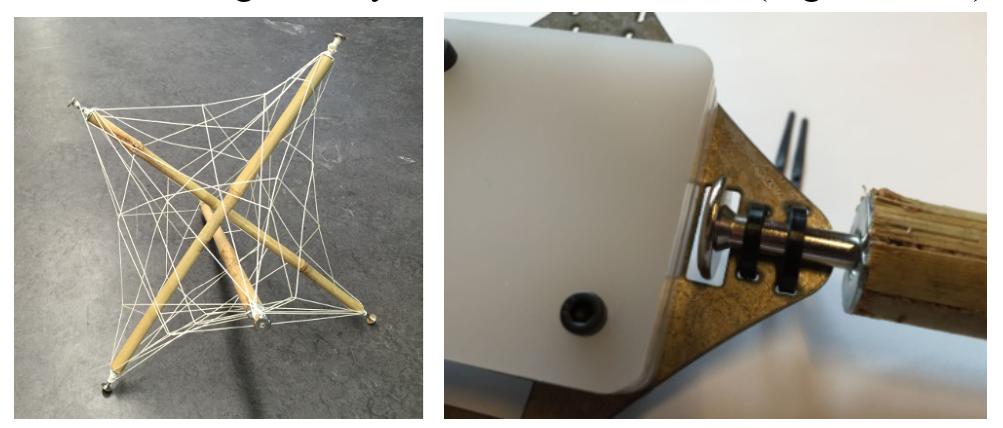
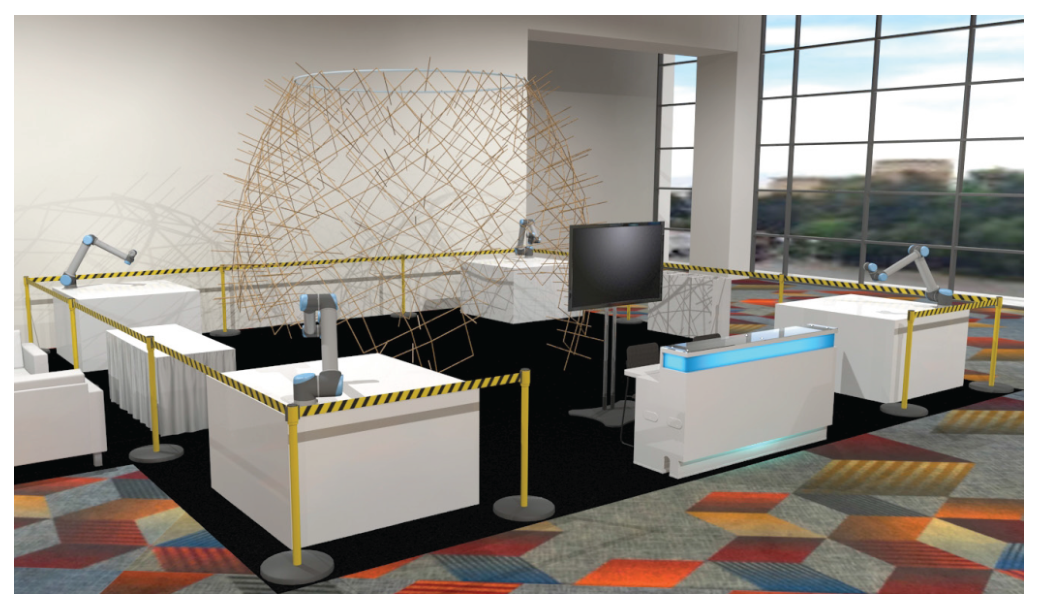
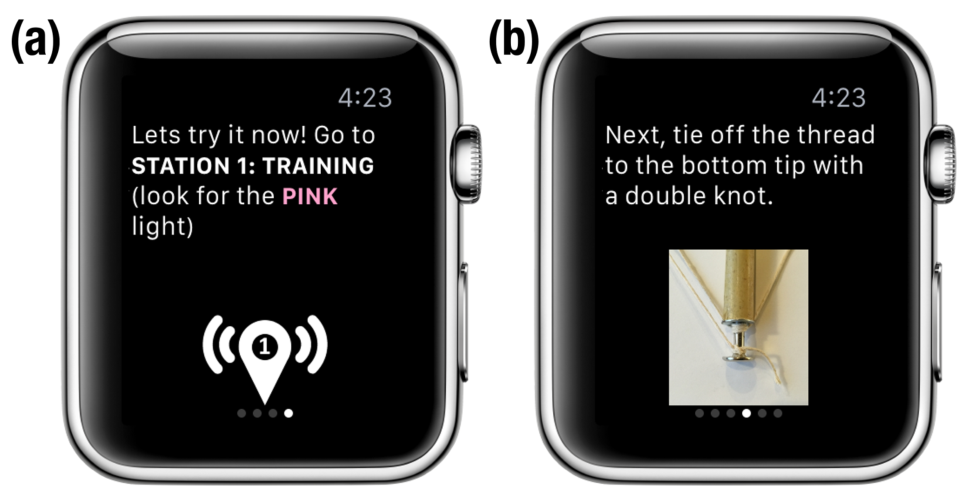
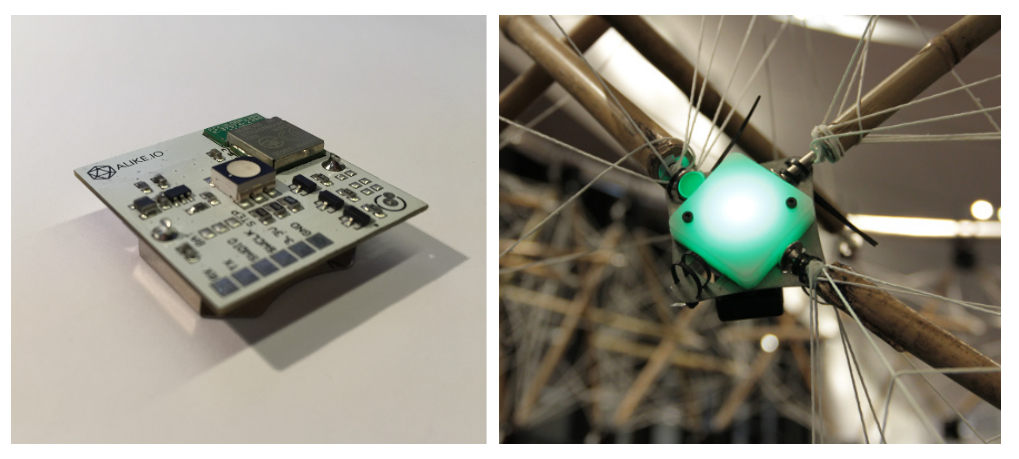
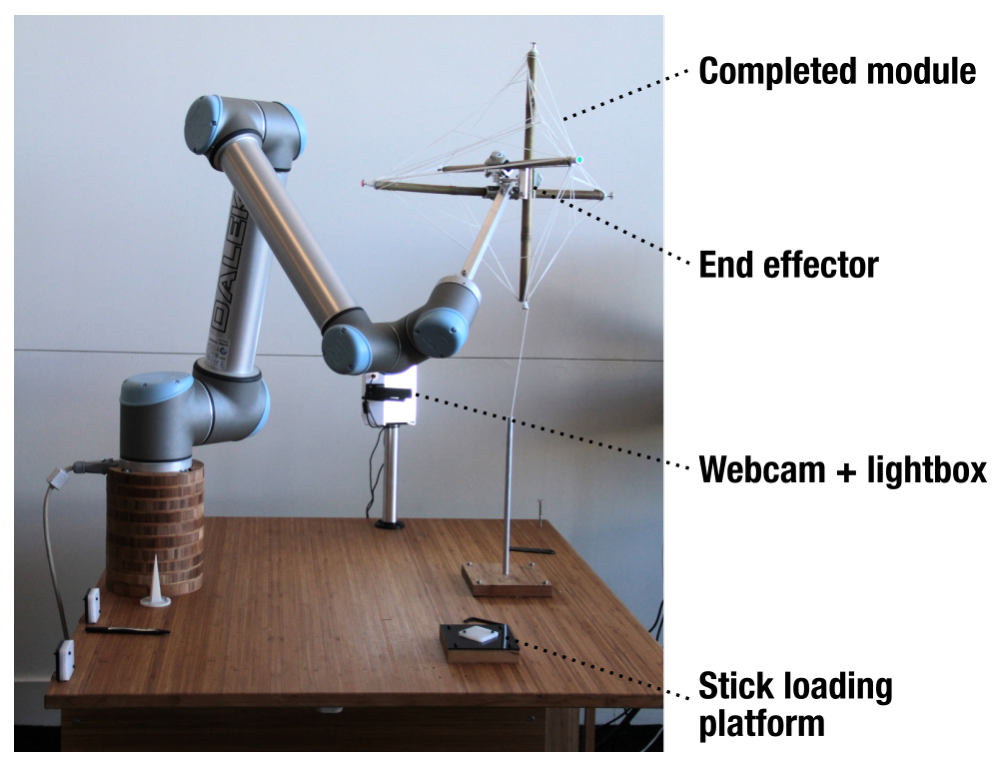
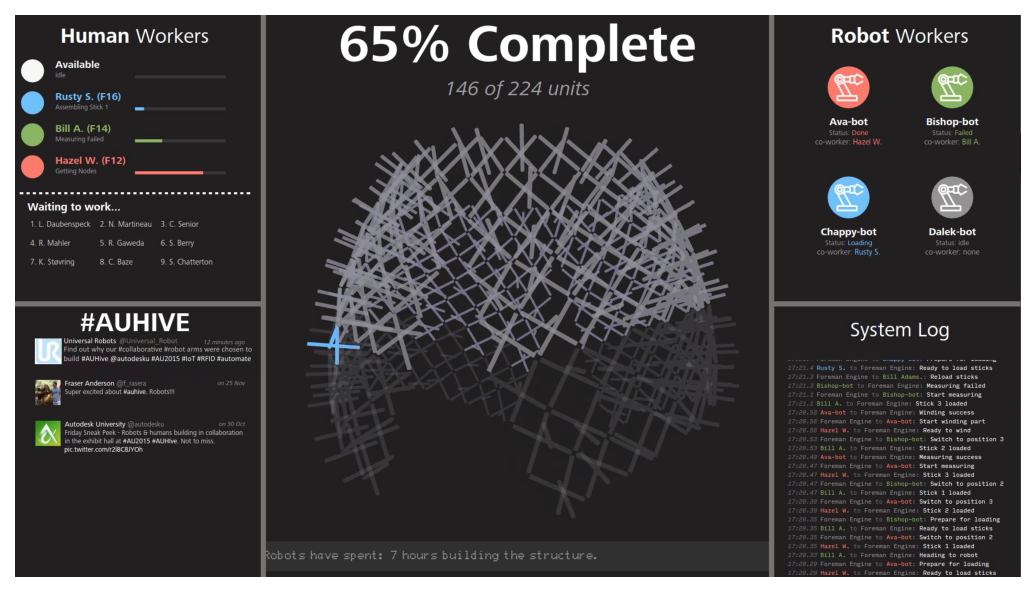
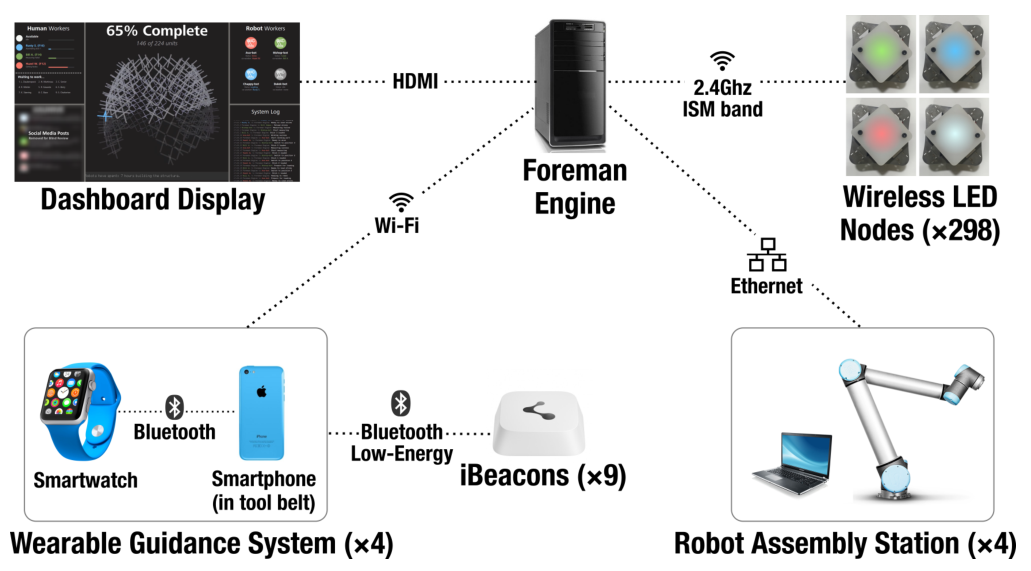
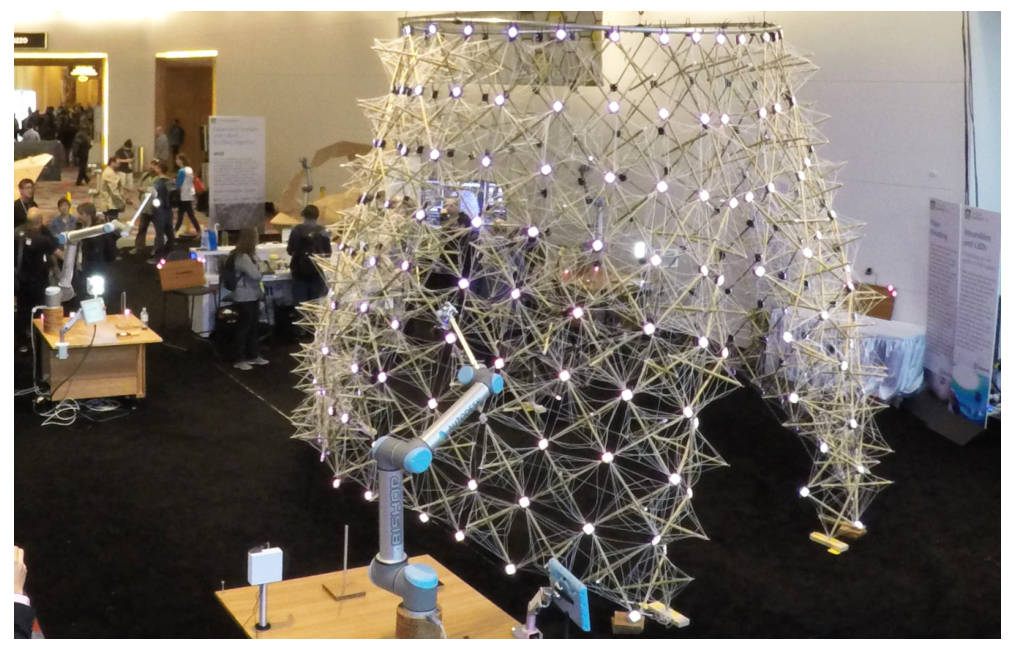
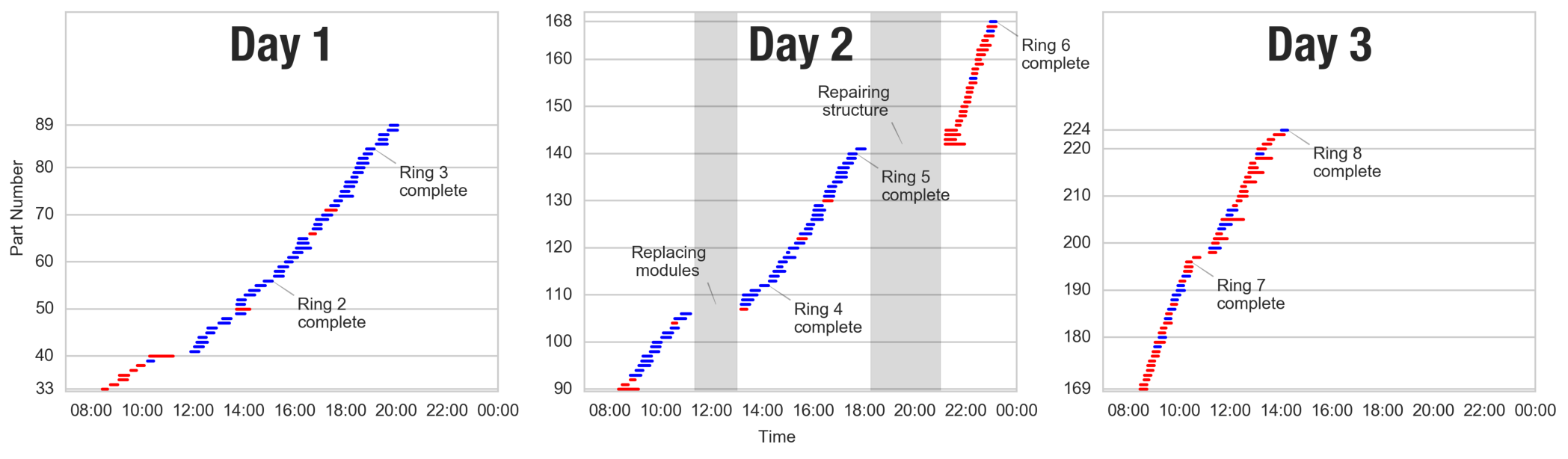
In recent years, extensive research in the HCI literature has explored interactive techniques for digital fabrication. However, little attention in this body of work has examined how to involve and guide human workers in fabricating larger-scale structures. We propose a novel model of crowdsourced fabrication, in which a large number of workers and volunteers are guided through the process of building a pre-designed structure. The process is facilitated by an intelligent construction space capable of guiding individual workers and coordinating the overall build process. More specifically, we explore the use of smartwatches, indoor location sensing, and instrumented construction materials to provide real-time guidance to workers, coordinated by a foreman engine that manages the overall build process. We report on a three day deployment of our system to construct a 12-tall bamboo pavilion with assistance from more than one hundred volunteer workers, and reflect on observations and feedback collected during the exhibit.
Figures


BibTeX
@inproceedings{10.1145/2984511.2984553,
 abstract = {In recent years, extensive research in the HCI literature has explored interactive techniques for digital fabrication. However, little attention in this body of work has examined how to involve and guide human workers in fabricating larger-scale structures. We propose a novel model of crowdsourced fabrication, in which a large number of workers and volunteers are guided through the process of building a pre-designed structure. The process is facilitated by an intelligent construction space capable of guiding individual workers and coordinating the overall build process. More specifically, we explore the use of smartwatches, indoor location sensing, and instrumented construction materials to provide real-time guidance to workers, coordinated by a foreman engine that manages the overall build process. We report on a three day deployment of our system to construct a 12-tall bamboo pavilion with assistance from more than one hundred volunteer workers, and reflect on observations and feedback collected during the exhibit.},
 address = {New York, NY, USA},
 author = {Lafreniere, Benjamin and Grossman, Tovi and Anderson, Fraser and Matejka, Justin and Kerrick, Heather and Nagy, Danil and Vasey, Lauren and Atherton, Evan and Beirne, Nicholas and Coelho, Marcelo H. and Cote, Nicholas and Li, Steven and Nogueira, Andy and Nguyen, Long and Schwinn, Tobias and Stoddart, James and Thomasson, David and Wang, Ray and White, Thomas and Benjamin, David and Conti, Maurice and Menges, Achim and Fitzmaurice, George},
 booktitle = {Proceedings of the 29th Annual Symposium on User Interface Software and Technology},
 doi = {10.1145/2984511.2984553},
 isbn = {9781450341899},
 keywords = {fabrication, wearables, iot, crowdsourcing},
 location = {Tokyo, Japan},
 numpages = {14},
 pages = {15–28},
 publisher = {Association for Computing Machinery},
 series = {UIST '16},
 title = {Crowdsourced Fabrication},
 url = {https://doi.org/10.1145/2984511.2984553},
 year = {2016}
}