MakeAloud: Think-Aloud to Bridge Design-Fabrication Workflows
Abstract
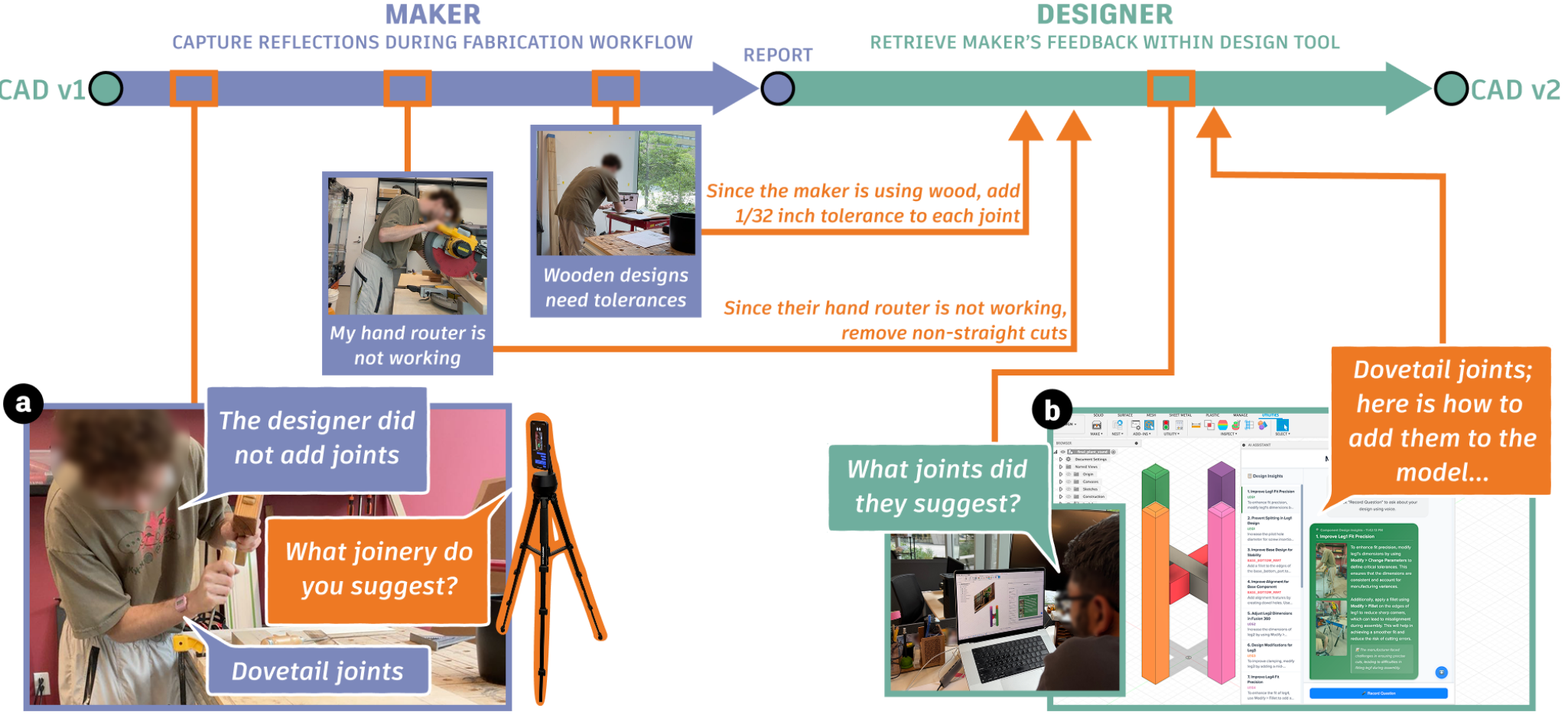
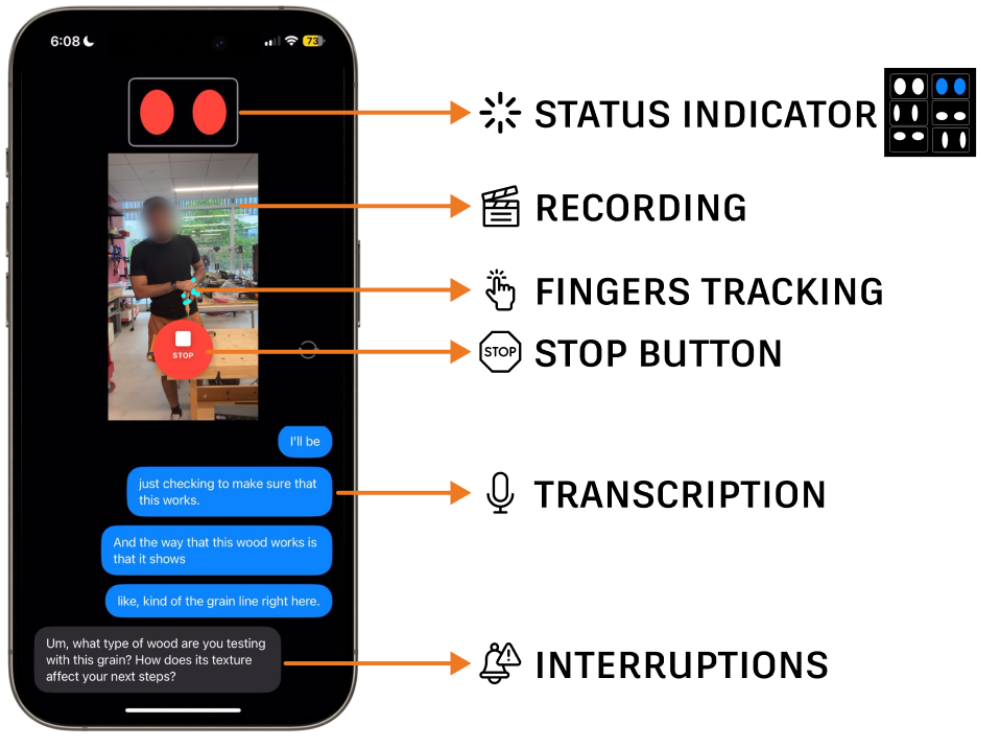
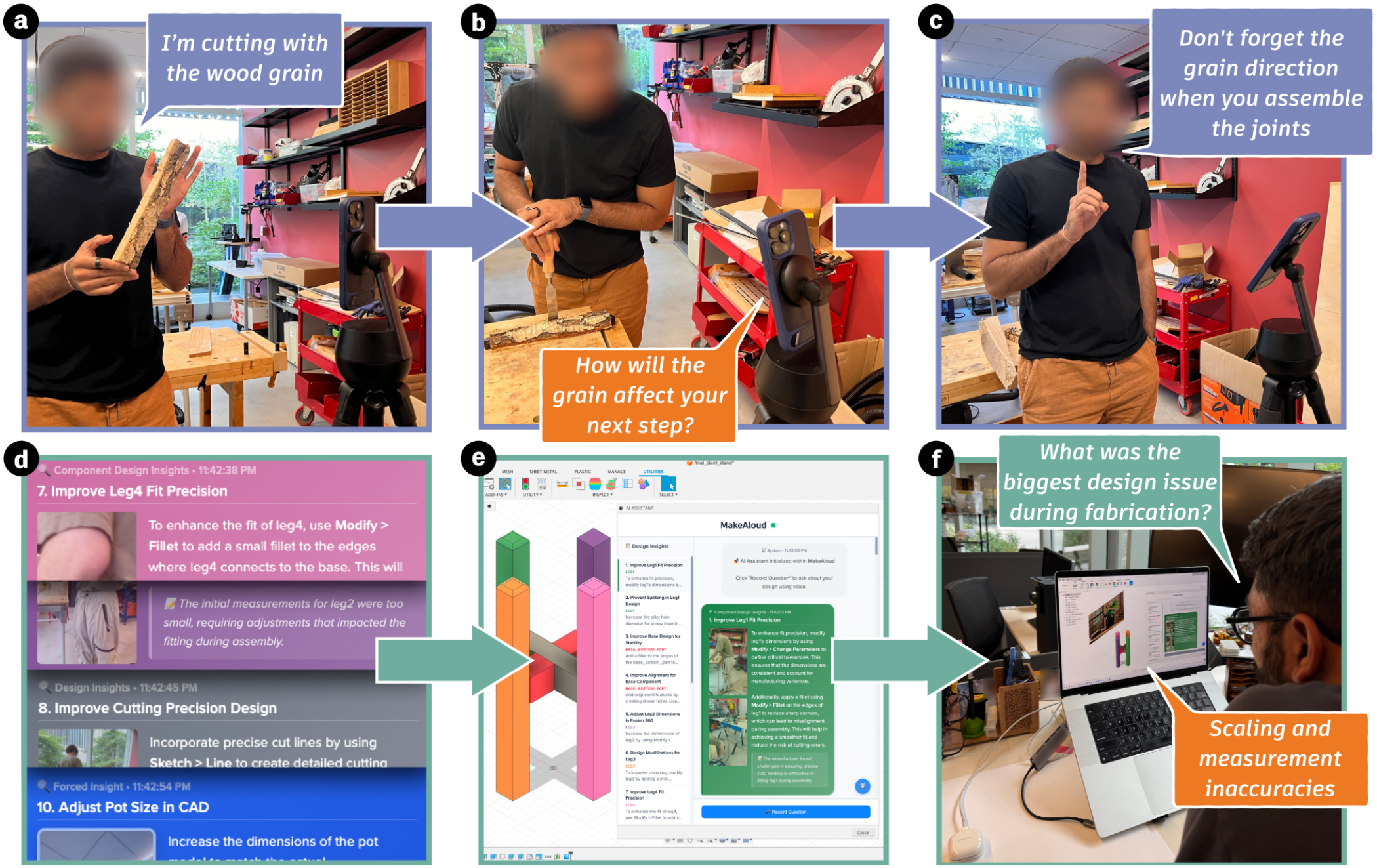
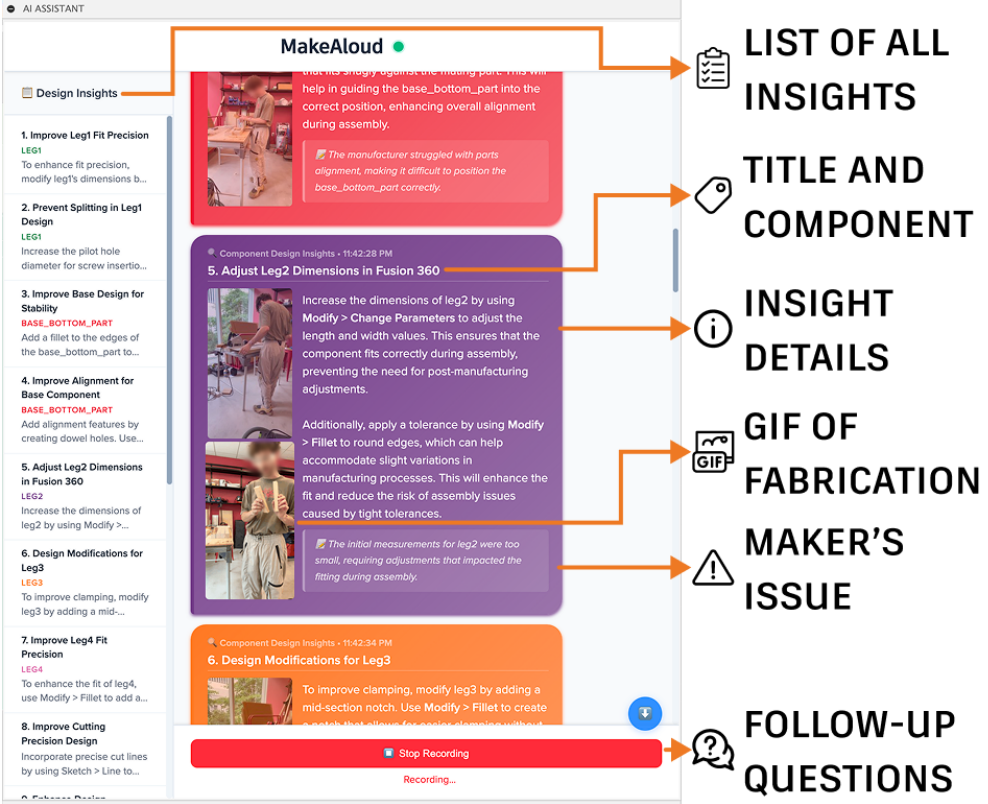
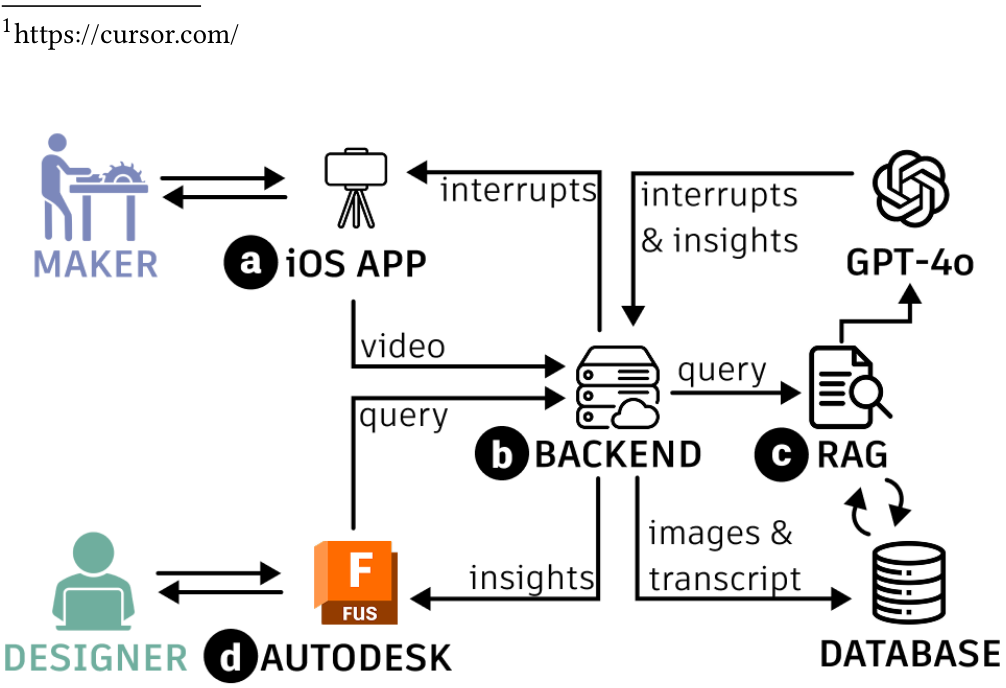
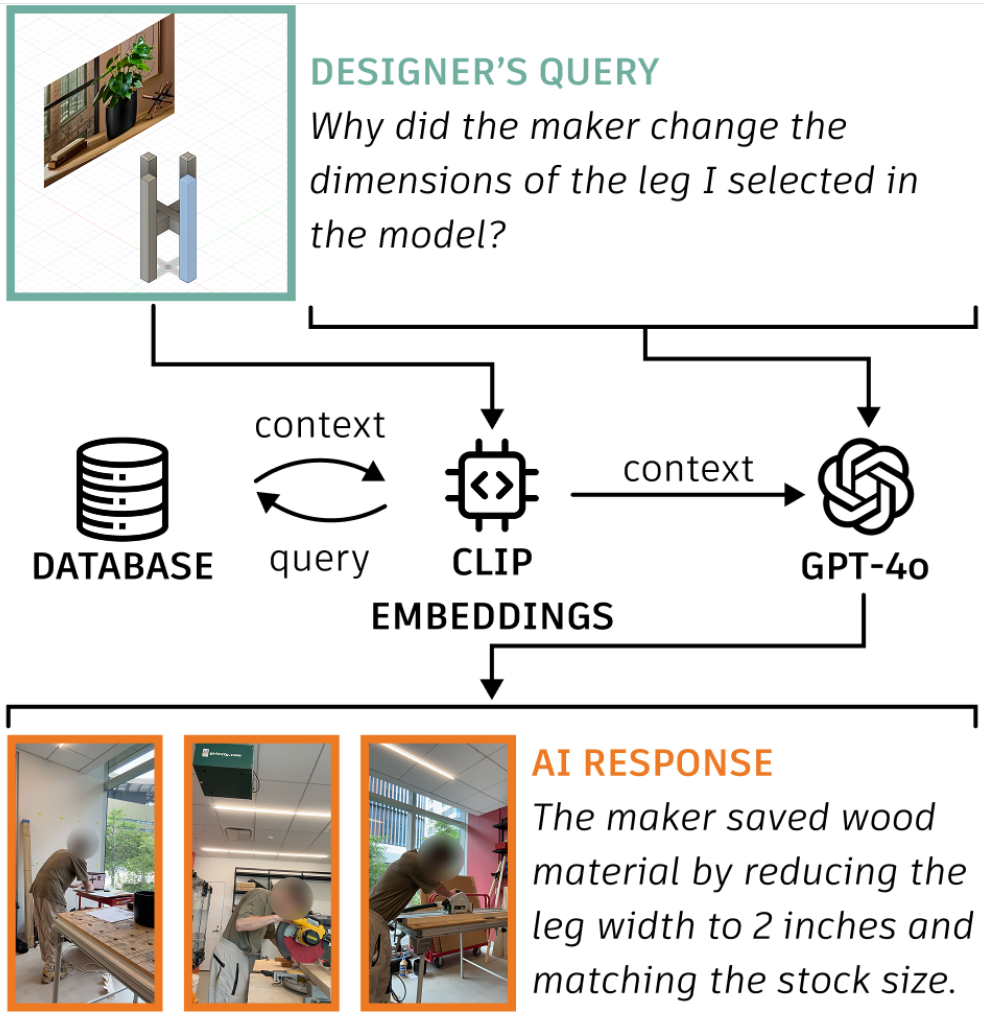
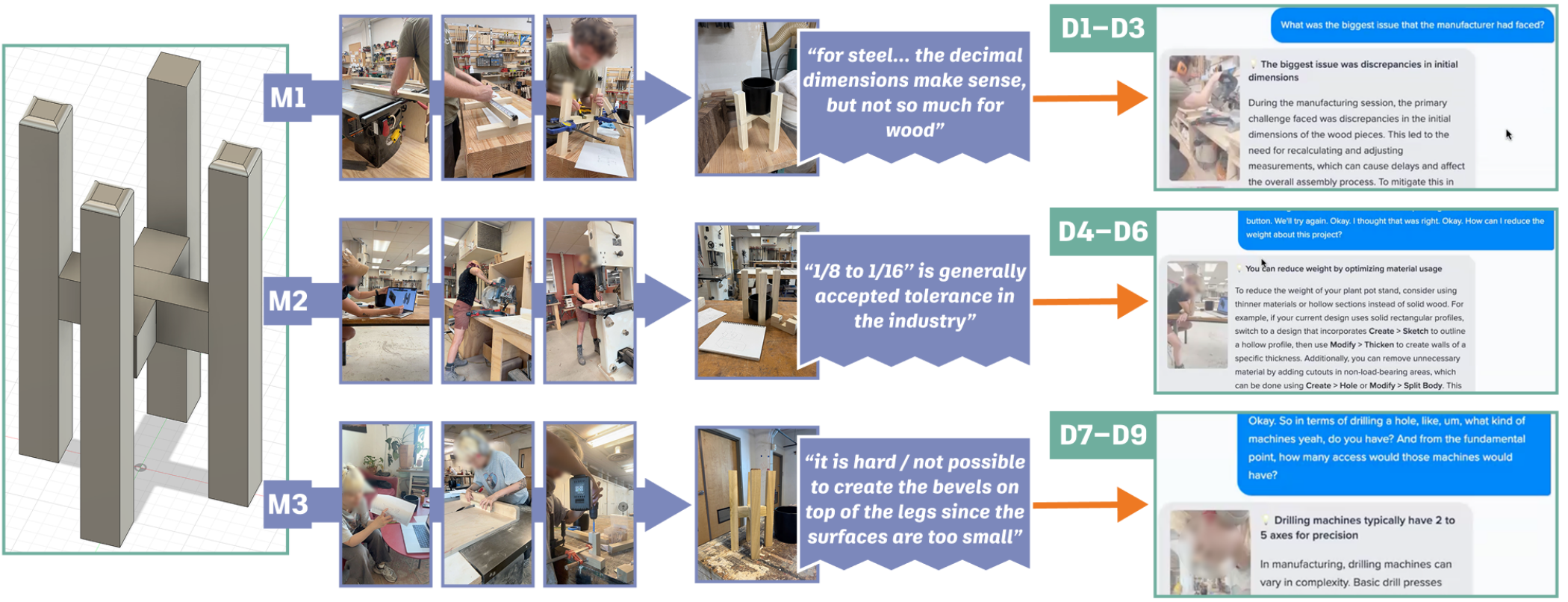
Translating Computer-Aided Design (CAD) models into physical objects requires expertise and adjustments to navigate fabrication constraints. Makers develop this tacit knowledge by understanding materials, techniques, and practical requirements. Adjustments are typically shared with designer collaborators through sketches and text. However, this documentation lacks situated knowledge gained during fabrication and remains disconnected from the model. To explore how computational tools could address these limitations, we developed MakeAloud, a design probe leveraging AI to capture makers’ in-situ knowledge with hand-tracking hardware and think-aloud computing and then generate design insights within collaborators’ CAD tools. Through a study with woodworkers and designers, we identify three design considerations for designer-maker collaboration tools: surfacing fabrication constraints in CAD to preserve designer intent, supporting asymmetrical domain expertise through AI-mediated communication, and building collective fabrication knowledge archives. This work contributes empirical insights into how AI can bridge design and fabrication workflows, offering pathways for cross-disciplinary collaboration.
Figures
BibTeX
@inproceedings{10.1145/3800645.3813028,
author = {Batra, Ritik and Wannamaker, Kendra and Fitzmaurice, George and Matejka, Justin},
title = {MakeAloud: Think-Aloud to Bridge Design-Fabrication Workflows},
year = {2026},
isbn = {9798400725630},
publisher = {Association for Computing Machinery},
address = {New York, NY, USA},
url = {https://doi.org/10.1145/3800645.3813028},
doi = {10.1145/3800645.3813028},
abstract = {Translating Computer-Aided Design (CAD) models into physical objects requires expertise and adjustments to navigate fabrication constraints. Makers develop this tacit knowledge by understanding materials, techniques, and practical requirements. Adjustments are typically shared with designer collaborators through sketches and text. However, this documentation lacks situated knowledge gained during fabrication and remains disconnected from the model. To explore how computational tools could address these limitations, we developed MakeAloud, a design probe leveraging AI to capture makers’ in-situ knowledge with hand-tracking hardware and think-aloud computing and then generate design insights within collaborators’ CAD tools. Through a study with woodworkers and designers, we identify three design considerations for designer-maker collaboration tools: surfacing fabrication constraints in CAD to preserve designer intent, supporting asymmetrical domain expertise through AI-mediated communication, and building collective fabrication knowledge archives. This work contributes empirical insights into how AI can bridge design and fabrication workflows, offering pathways for cross-disciplinary collaboration.},
booktitle = {Proceedings of the 2026 Designing Interactive Systems Conference},
pages = {2037–2053},
numpages = {17},
keywords = {Design, Fabrication, Documentation, Collaboration, AI},
location = {
},
series = {DIS '26}
}