Think-Aloud Computing: Supporting Rich and Low-Effort Knowledge Capture
Abstract
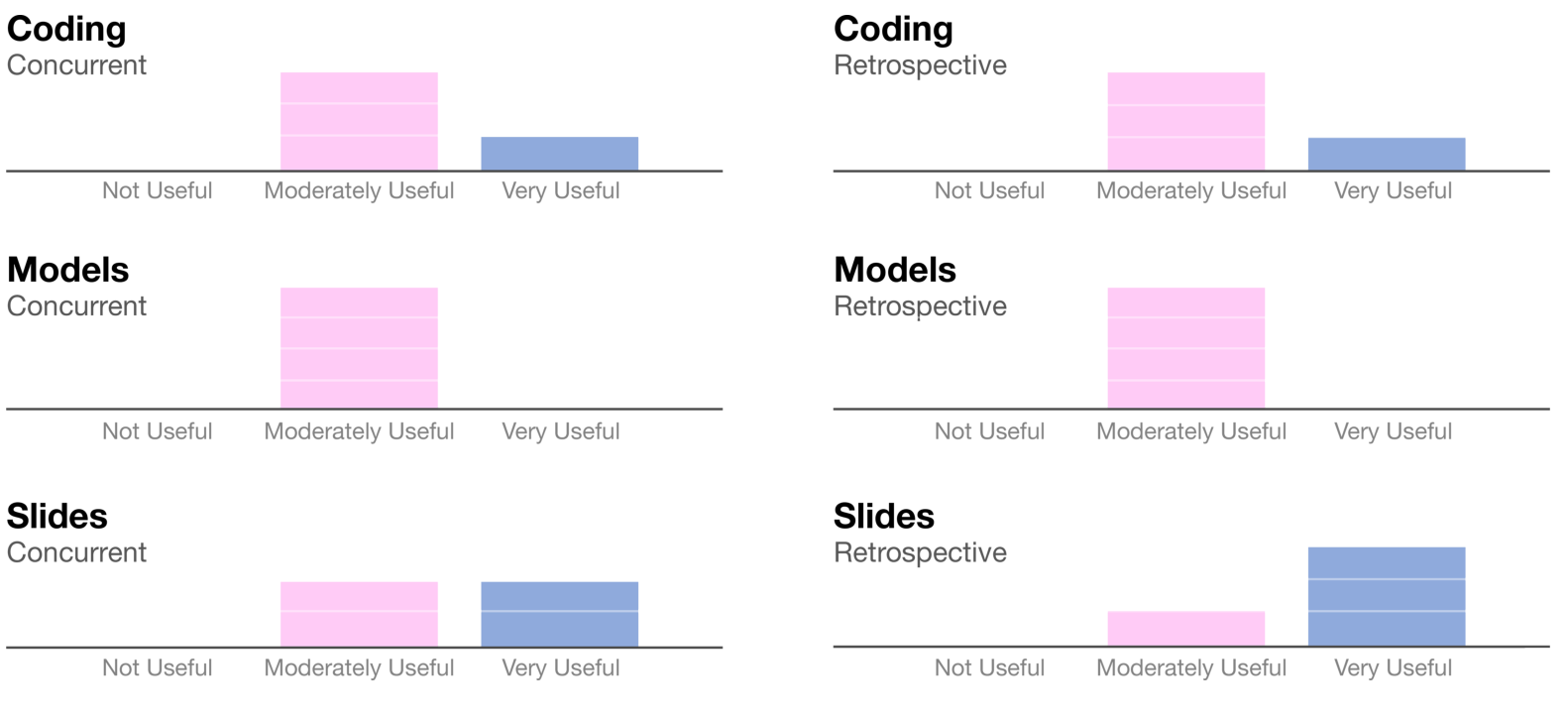
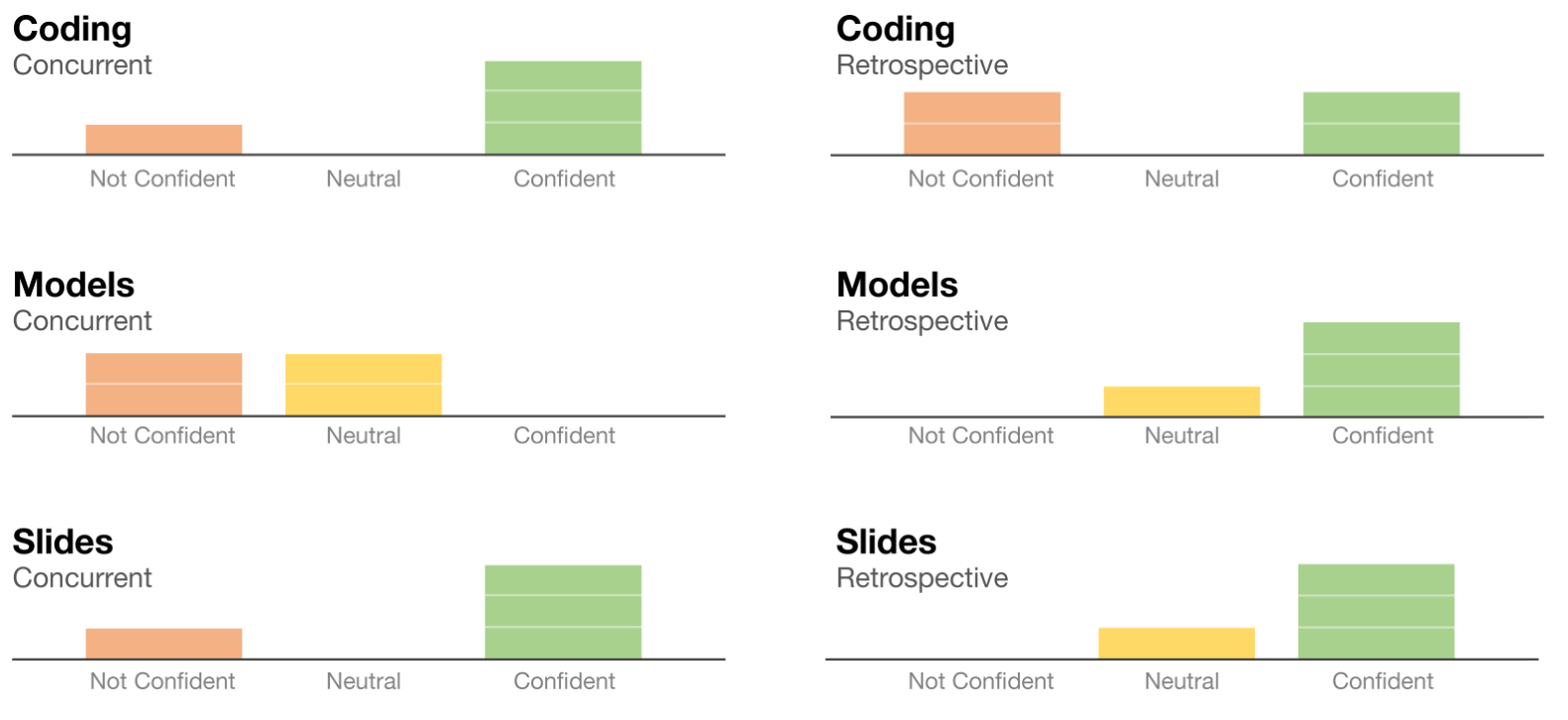
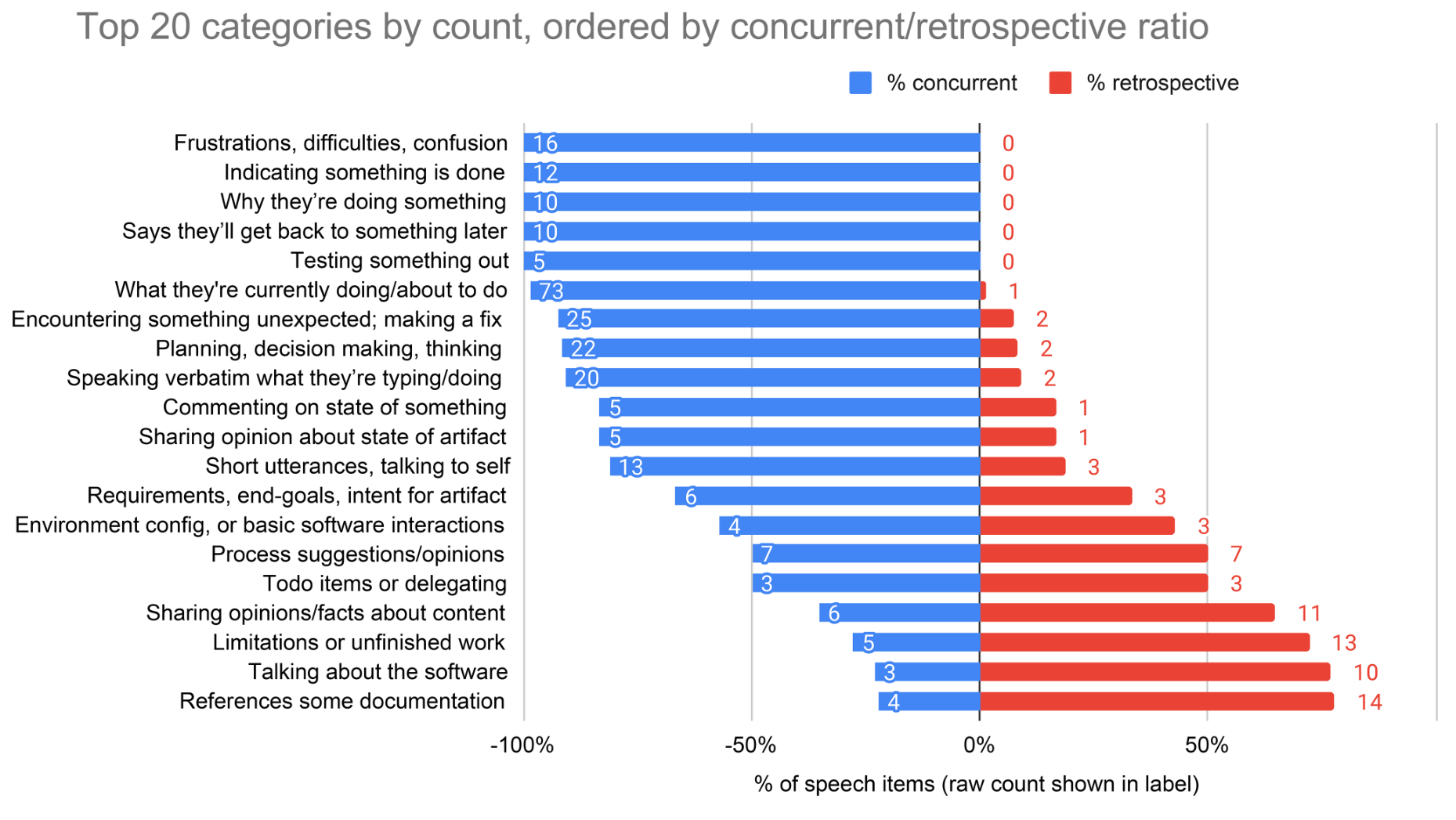
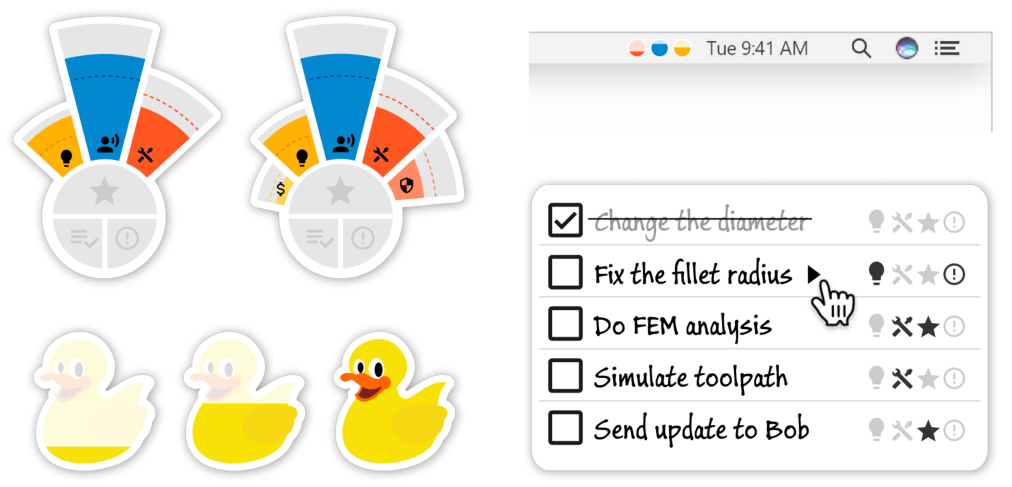
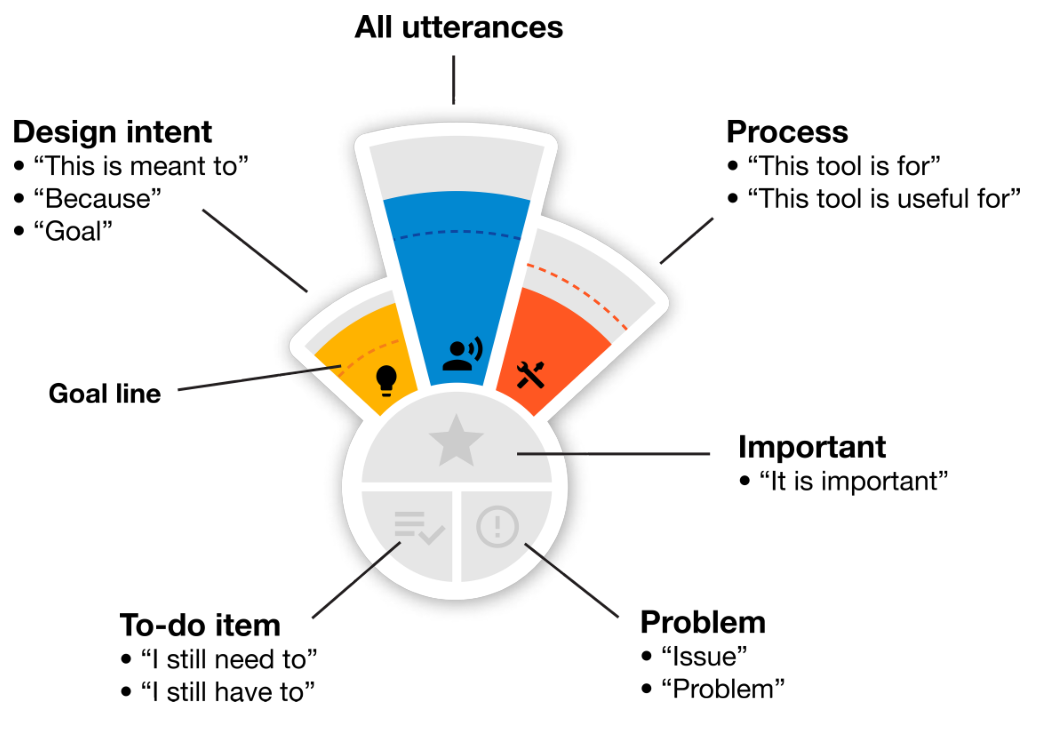
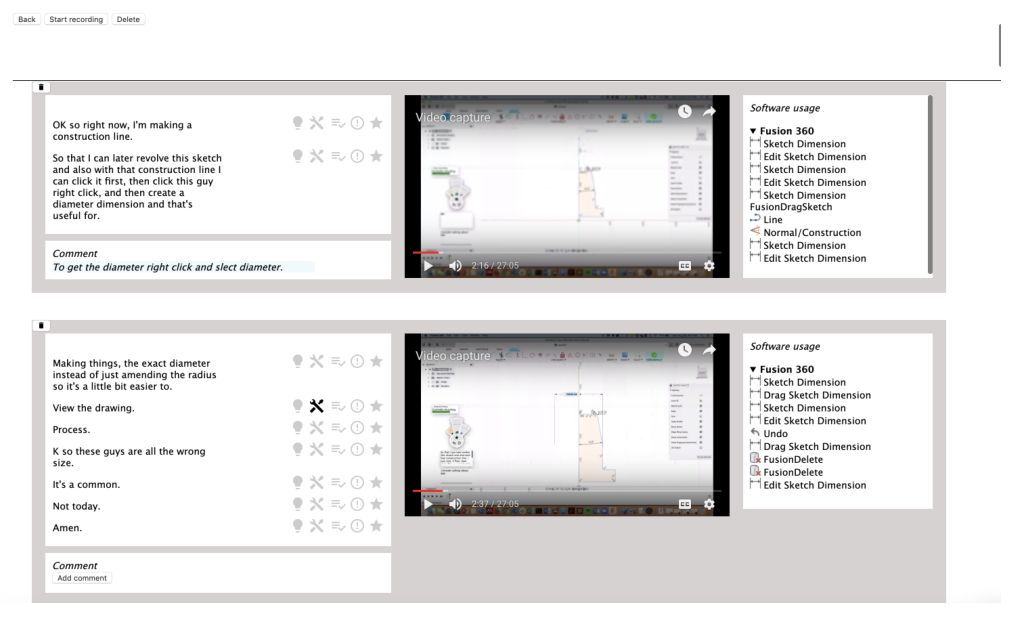
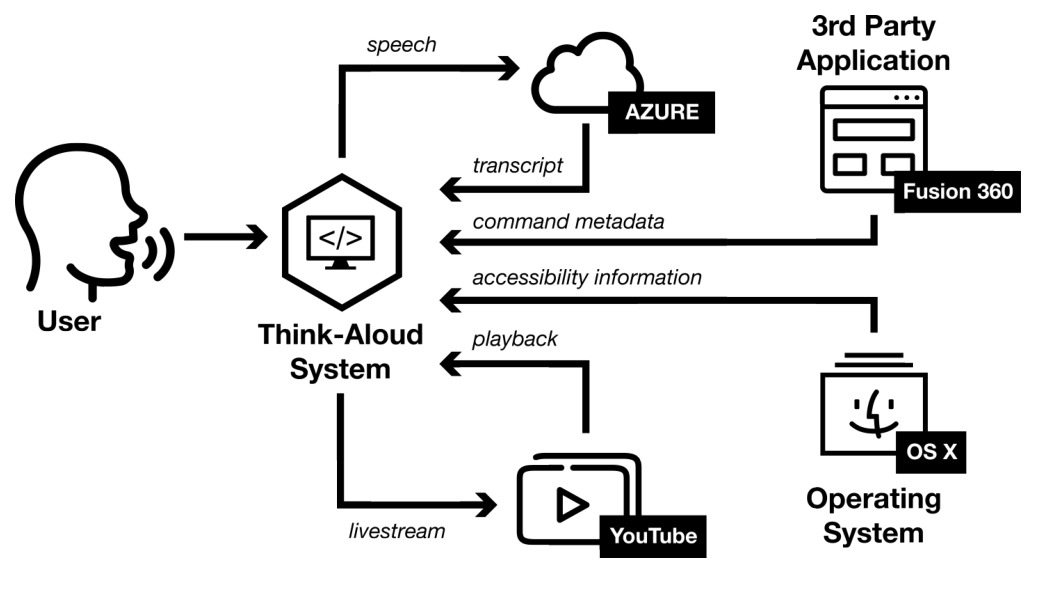
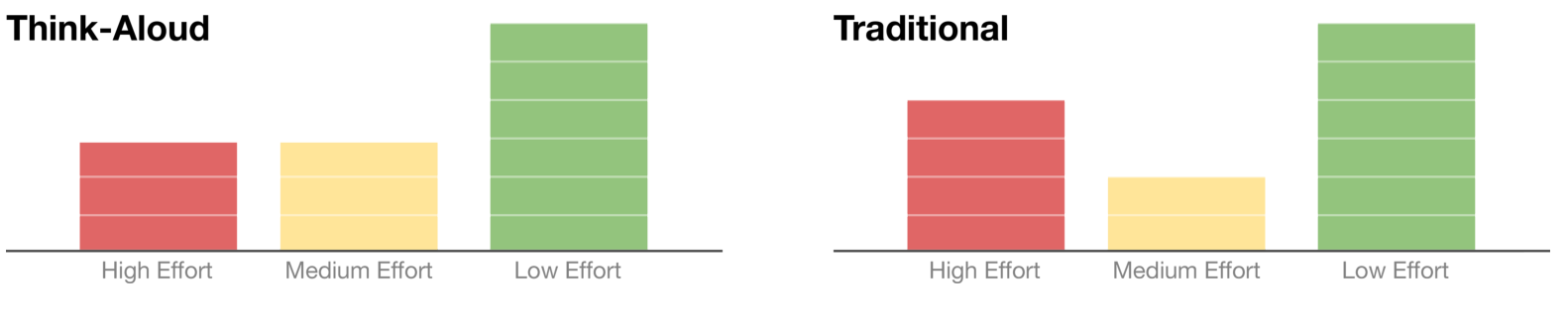
When users complete tasks on the computer, the knowledge they leverage and their intent is often lost because it is tedious or challenging to capture. This makes it harder to understand why a colleague designed a component a certain way or to remember requirements for software you wrote a year ago. We introduce think-aloud computing, a novel application of the think-aloud protocol where computer users are encouraged to speak while working to capture rich knowledge with relatively low effort. Through a formative study we find people shared information about design intent, work processes, problems encountered, to-do items, and other useful information. We developed a prototype that supports think-aloud computing by prompting users to speak and contextualizing speech with labels and application context. Our evaluation shows more subtle design decisions and process explanations were captured in think-aloud than via traditional documentation. Participants reported that think-aloud required similar effort as traditional documentation.
Figures
BibTeX
@inproceedings{10.1145/3411764.3445066,
 abstract = {When users complete tasks on the computer, the knowledge they leverage and their intent is often lost because it is tedious or challenging to capture. This makes it harder to understand why a colleague designed a component a certain way or to remember requirements for software you wrote a year ago. We introduce think-aloud computing, a novel application of the think-aloud protocol where computer users are encouraged to speak while working to capture rich knowledge with relatively low effort. Through a formative study we find people shared information about design intent, work processes, problems encountered, to-do items, and other useful information. We developed a prototype that supports think-aloud computing by prompting users to speak and contextualizing speech with labels and application context. Our evaluation shows more subtle design decisions and process explanations were captured in think-aloud than via traditional documentation. Participants reported that think-aloud required similar effort as traditional documentation.},
 address = {New York, NY, USA},
 articleno = {199},
 author = {Krosnick, Rebecca and Anderson, Fraser and Matejka, Justin and Oney, Steve and S. Lasecki, Walter and Grossman, Tovi and Fitzmaurice, George},
 booktitle = {Proceedings of the 2021 CHI Conference on Human Factors in Computing Systems},
 doi = {10.1145/3411764.3445066},
 isbn = {9781450380966},
 keywords = {knowledge capture, Think-aloud, process, documentation},
 location = {Yokohama, Japan},
 numpages = {13},
 publisher = {Association for Computing Machinery},
 series = {CHI '21},
 title = {Think-Aloud Computing: Supporting Rich and Low-Effort Knowledge Capture},
 url = {https://doi.org/10.1145/3411764.3445066},
 year = {2021}
}