AQuA: Automated Question-Answering in Software Tutorial Videos with Visual Anchors
Abstract
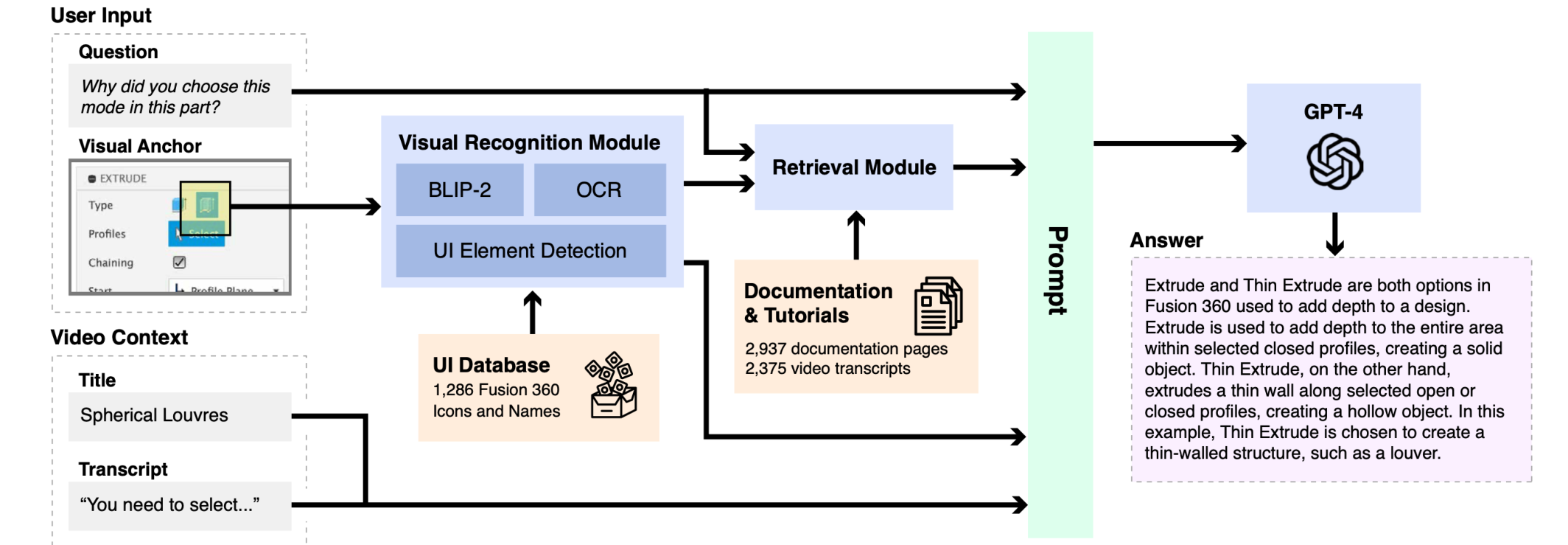
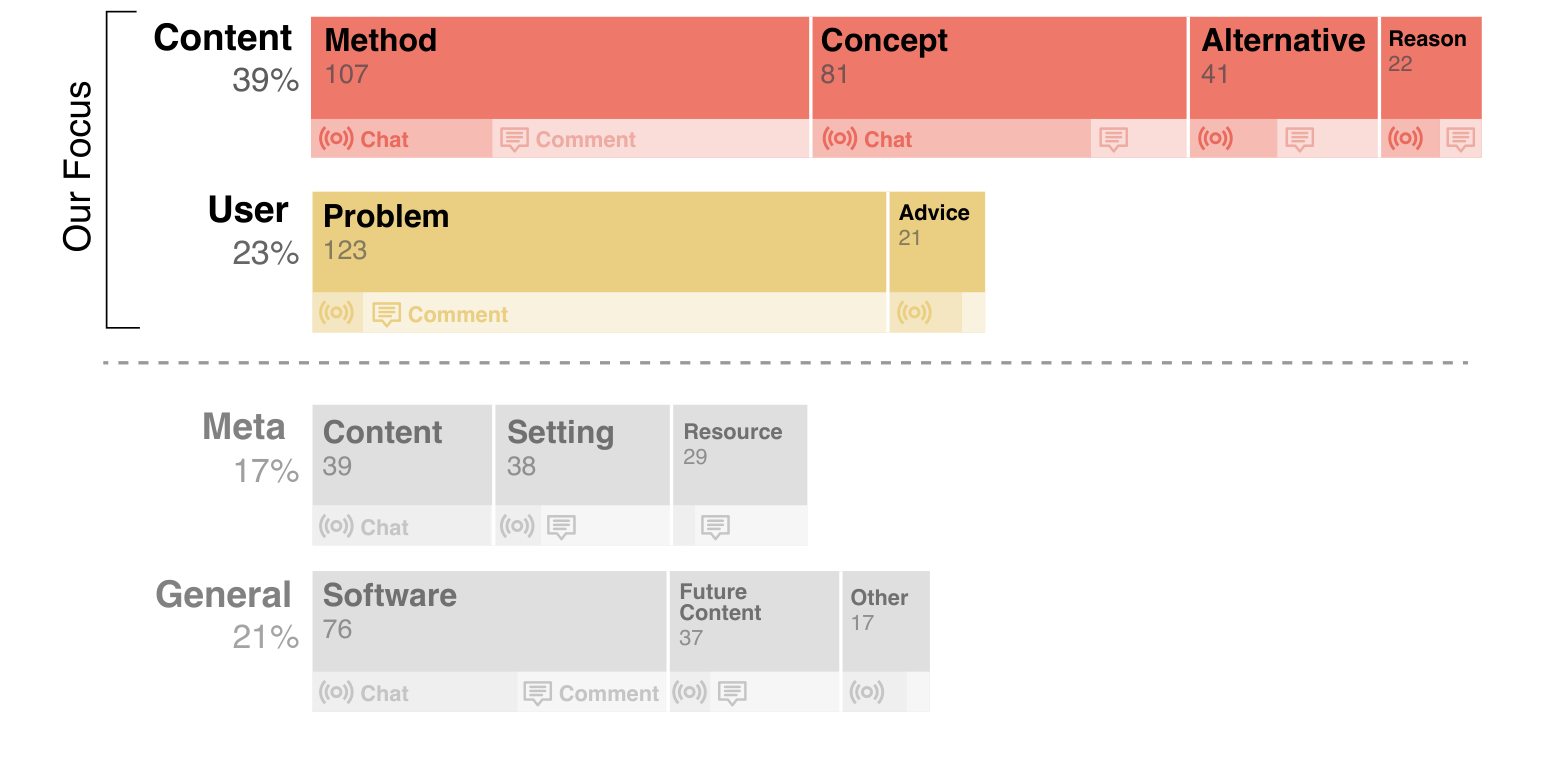
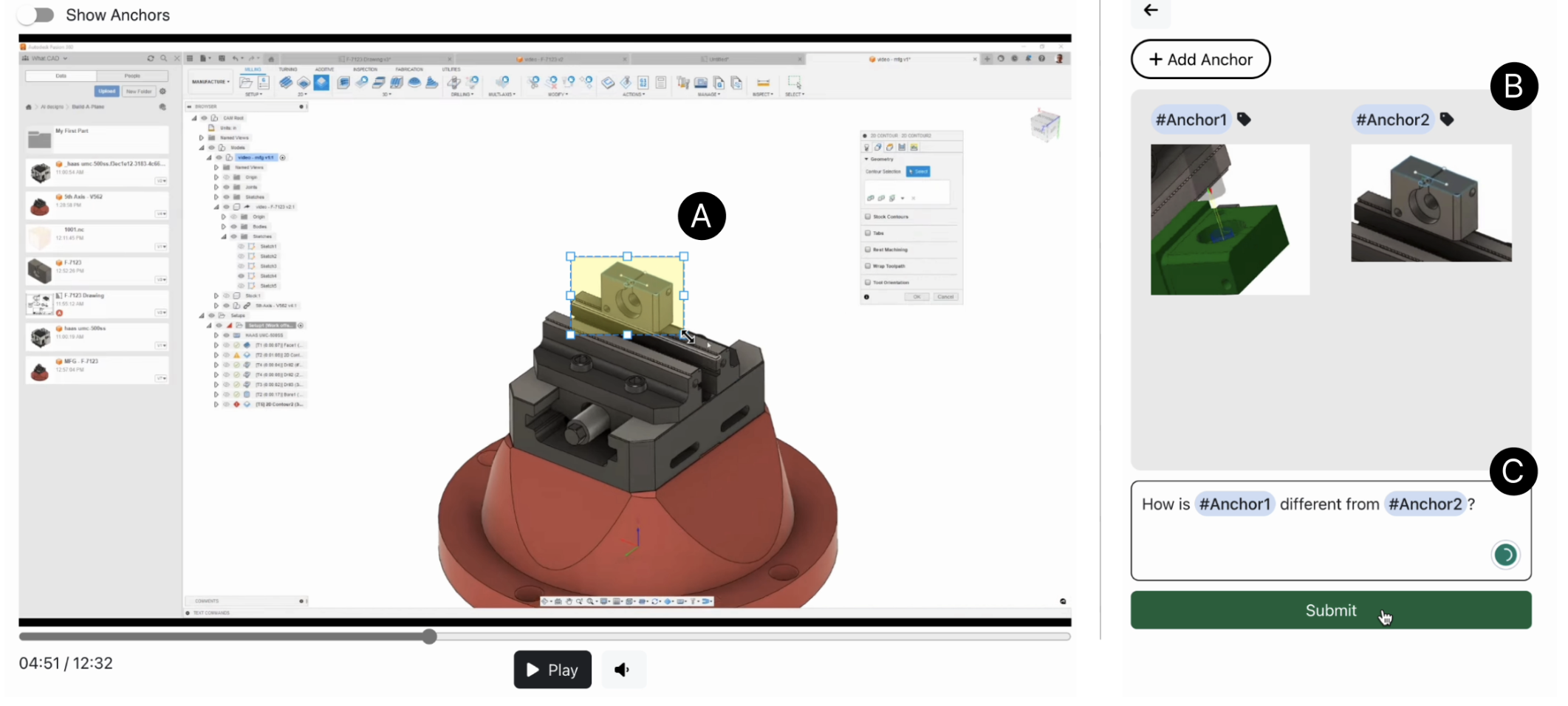
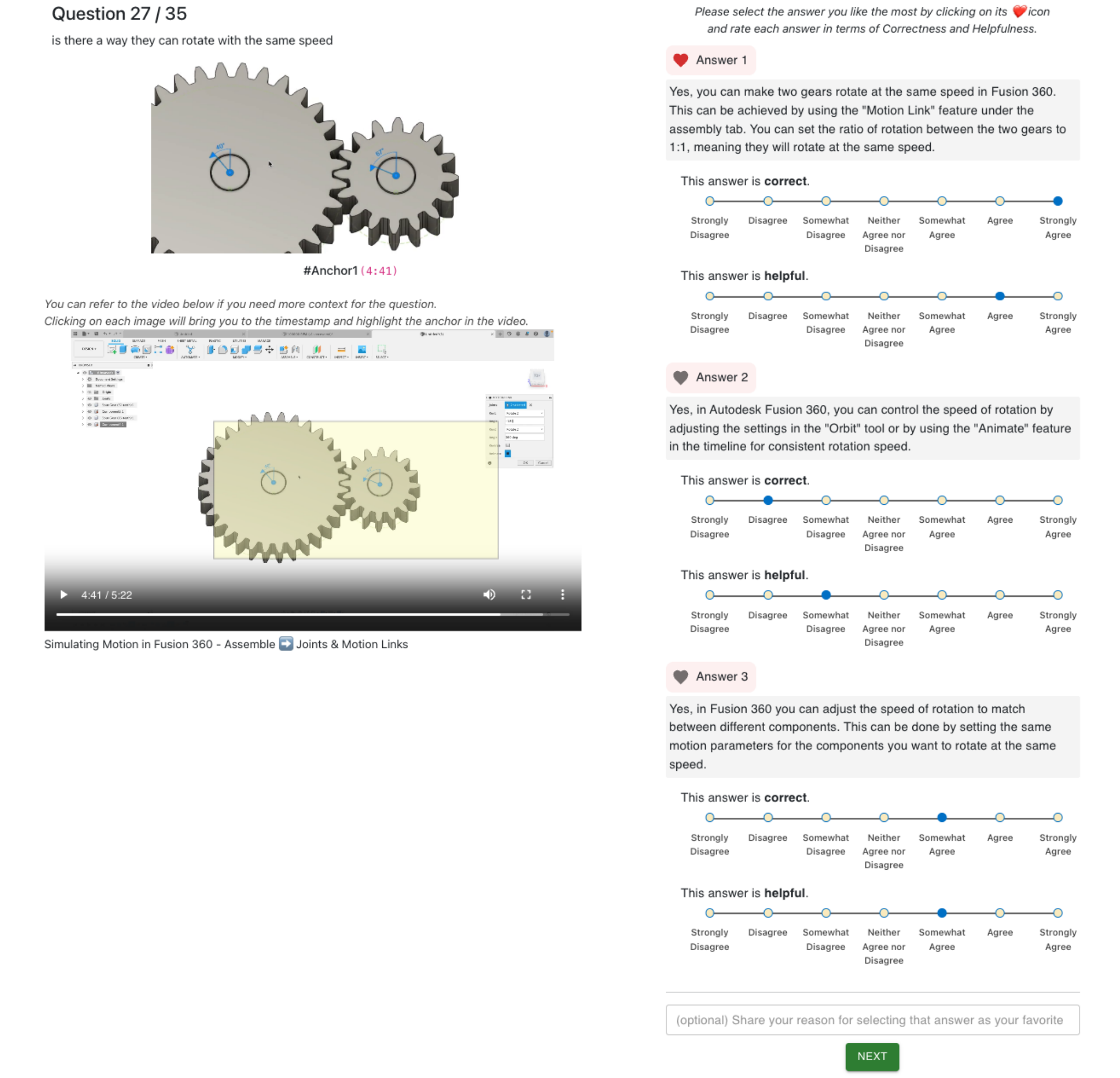
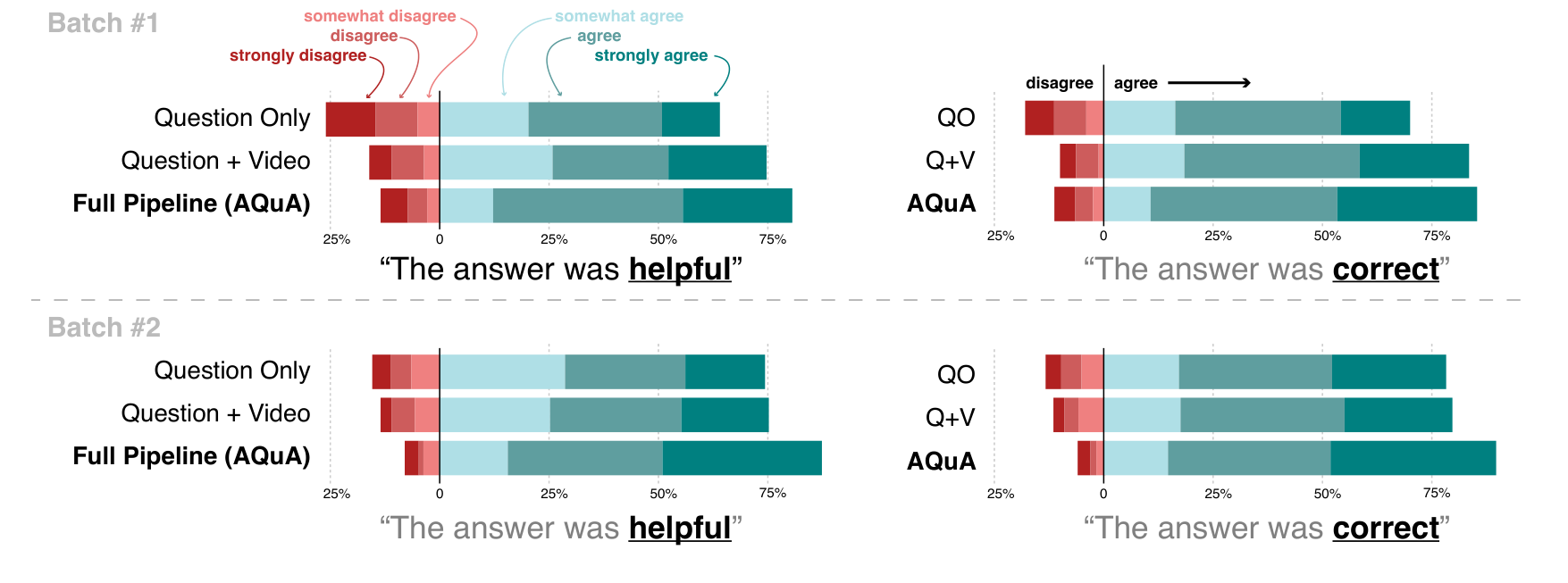
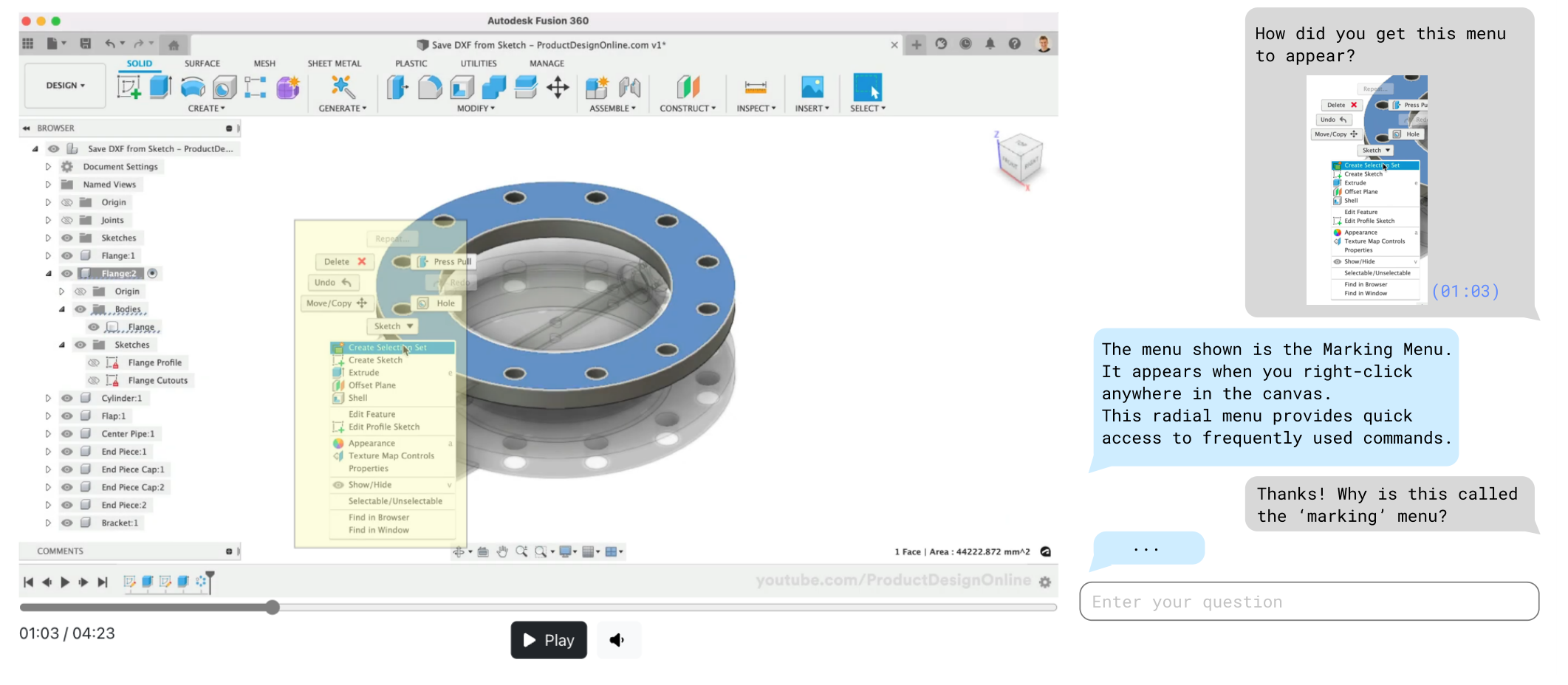
Tutorial videos are a popular help source for learning feature-rich software. However, getting quick answers to questions about tutorial videos is difficult. We present an automated approach for responding to tutorial questions. By analyzing 633 questions found in 5,944 video comments, we identified different question types and observed that users frequently described parts of the video in questions. We then asked participants (N=24) to watch tutorial videos and ask questions while annotating the video with relevant visual anchors. Most visual anchors referred to UI elements and the application workspace. Based on these insights, we built AQuA, a pipeline that generates useful answers to questions with visual anchors. We demonstrate this for Fusion 360, showing that we can recognize UI elements in visual anchors and generate answers using GPT-4 augmented with that visual information and software documentation. An evaluation study (N=16) demonstrates that our approach provides better answers than baseline methods.
Figures
![Figure 4: Our Visual Recognition Module is composed of Image Captioning, UI Element Detection, and Optical CharacterRecognition (OCR). We use BLIP-2 [34] to obtain a general description of the visual](/publication/aqua-automated-question-answering-in-software-tutorial-videos/figure-4-cropped.png)

BibTeX
@inproceedings{10.1145/3613904.3642752,
  author = {Yang, Saelyne and Vermeulen, Jo and Fitzmaurice, George and Matejka, Justin},
  title = {AQuA: Automated Question-Answering in Software Tutorial Videos with Visual Anchors},
  year = {2024},
  isbn = {9798400703300},
  publisher = {Association for Computing Machinery},
  address = {New York, NY, USA},
  url = {https://doi.org/10.1145/3613904.3642752},
  doi = {10.1145/3613904.3642752},
  abstract = {Tutorial videos are a popular help source for learning feature-rich software. However, getting quick answers to questions about tutorial videos is difficult. We present an automated approach for responding to tutorial questions. By analyzing 633 questions found in 5,944 video comments, we identified different question types and observed that users frequently described parts of the video in questions. We then asked participants (N=24) to watch tutorial videos and ask questions while annotating the video with relevant visual anchors. Most visual anchors referred to UI elements and the application workspace. Based on these insights, we built AQuA, a pipeline that generates useful answers to questions with visual anchors. We demonstrate this for Fusion 360, showing that we can recognize UI elements in visual anchors and generate answers using GPT-4 augmented with that visual information and software documentation. An evaluation study (N=16) demonstrates that our approach provides better answers than baseline methods.},
  booktitle = {Proceedings of the 2024 CHI Conference on Human Factors in Computing Systems},
  articleno = {928},
  numpages = {19},
  keywords = {generative AI, large language models, question answering, software learning, tutorial videos},
  location = {Honolulu, HI, USA},
  series = {CHI '24},
}